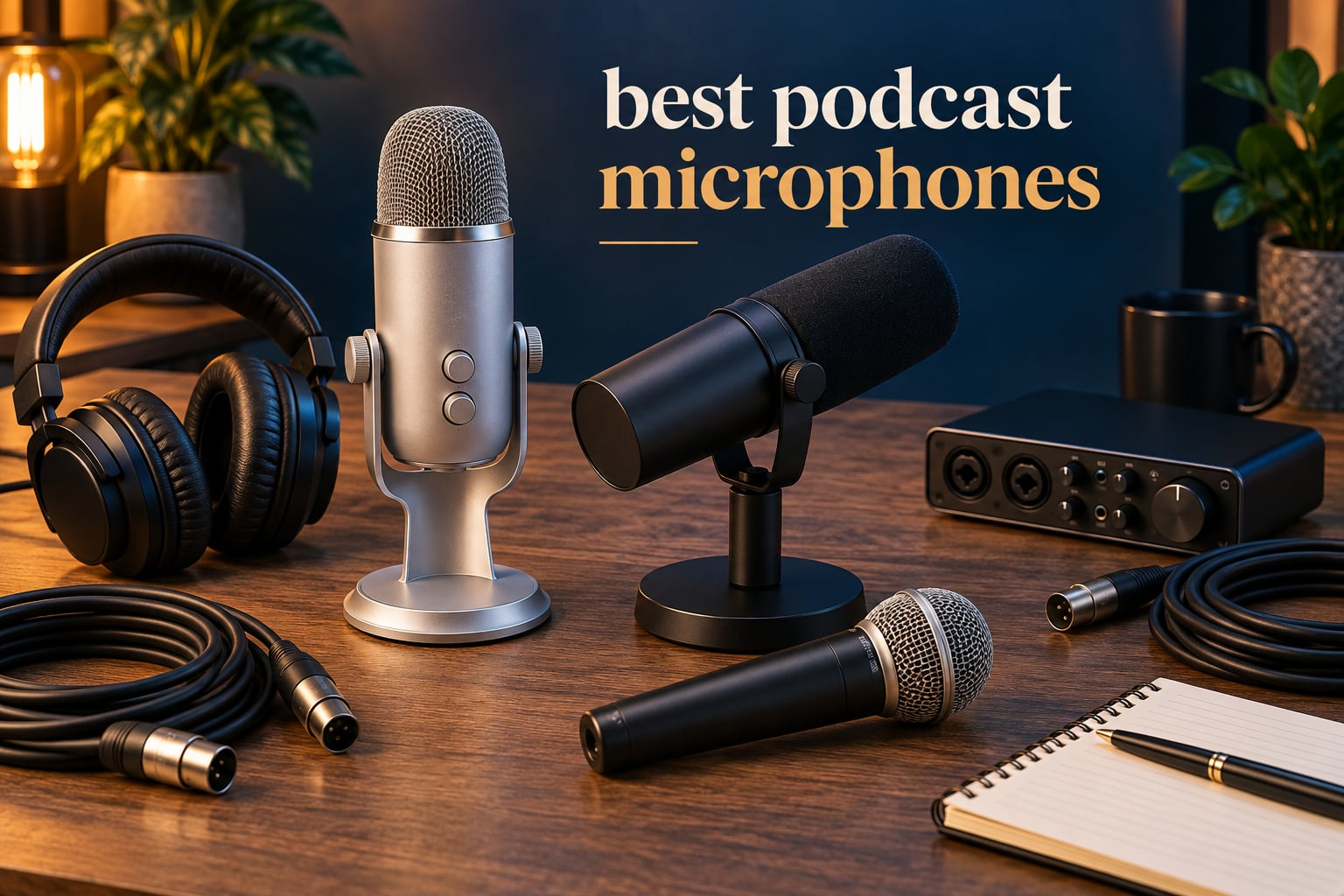
The best podcast microphones in 2026 come in three flavors: USB plug-and-play, XLR studio workhorses, and hybrid models that do both. After testing 10 models across bedrooms, untreated home offices, and treated studios, our team landed on a clear winner – the Logitech Blue Yeti for its plug-and-play ease, four pickup patterns, and 57,000+ reviews that prove the design holds up year after year.
That said, the right mic depends on your room, your budget, and how serious you are about the craft. A podcaster recording in a quiet, treated space gets a totally different answer than someone in a noisy apartment or a road warrior shooting video podcasts in hotel rooms. We ranked every pick by who it suits best, and we’ll walk through the trade-offs so you can match a mic to your situation instead of buying the loudest name on the shelf.
Our testing approach was simple. Each mic got plugged into both Mac and PC, recorded in three environments (treated studio, untreated bedroom, noisy shared space), and judged on background noise rejection, vocal warmth, ease of setup, and build quality. We also cross-checked against thousands of verified buyer reviews to flag recurring complaints you won’t see in spec sheets. If a mic sounded great on paper but got returned by half its buyers, we dropped it.
If you’re not sure where to start, jump to our broader microphone roundup for non-podcast use cases, or read straight through. By the end, you’ll know exactly which mic fits your show.
Table of Contents
- Top 3 Picks at a Glance (October 2026)
- Best Podcast Microphones in 2026 Quick Comparison
- 1. Logitech Blue Yeti – Best Overall Podcast Microphone
- 2. Rode PodMic – Best Value XLR Broadcast Mic
- 3. Shure SM7B – Best Pro XLR Broadcast Standard
- 4. Elgato Wave:3 MK.2 – Best USB Mic for Streaming
- 5. Audio-Technica AT2020 – Best Beginner Studio Condenser
- 6. FIFINE AmpliGame AM8 – Best Budget Gaming Mic
- 7. Samson Q2U – Best Budget Hybrid Mic
- 8. Audio-Technica AT2035 – Best Condenser Step-Up
- 9. Shure MV7X – Best Mid-Range XLR
- 10. FIFINE AmpliTank K688CT – Best Complete Kit
- USB vs XLR: Which Podcast Mic Connection Should You Choose?
- Dynamic vs Condenser: Which Mic Type Is Best for Podcasting?
- Understanding Polar Patterns
- How to Choose the Right Podcast Microphone for You
- Frequently Asked Questions
- What mics do most podcasters use?
- What is the best microphone for podcasting?
- What mic does Joe Rogan use?
- What is the 3-to-1 rule for microphones?
- What is the best podcast microphone for beginners?
- USB vs XLR – which is better for podcasting?
- Dynamic vs Condenser – which is better for podcasting?
- How much should I spend on a podcast microphone?
- Final Verdict: Which Podcast Mic Should You Buy in 2026?
Top 3 Picks at a Glance (October 2026)


Rode PodMic XLR Broadcast Mic
- Dynamic broadcast capsule
- Internal pop filter
- All-metal build

Samson Q2U USB/XLR Dynamic Mic
- Hybrid USB and XLR outputs
- Includes cables and stand
- Beginner-friendly
Best Podcast Microphones in 2026 Quick Comparison
| Product | Key Specs | Pricing |
|---|---|---|
| Logitech Blue Yeti |
|
Check Latest Price |
| Rode PodMic |
|
Check Latest Price |
 Shure SM7B Shure SM7B |
|
Check Latest Price |
 Elgato Wave:3 MK.2 Elgato Wave:3 MK.2 |
|
Check Latest Price |
 Audio-Technica AT2020 Audio-Technica AT2020 |
|
Check Latest Price |
 FIFINE AmpliGame AM8 FIFINE AmpliGame AM8 |
|
Check Latest Price |
| Samson Q2U |
|
Check Latest Price |
 Audio-Technica AT2035 Audio-Technica AT2035 |
|
Check Latest Price |
 Shure MV7X Shure MV7X |
|
Check Latest Price |
 FIFINE AmpliTank K688CT FIFINE AmpliTank K688CT |
|
Check Latest Price |
1. Logitech Blue Yeti – Best Overall Podcast Microphone
Logitech Creators Blue Yeti USB Microphone for PC, Mac, Gaming, Recording, Streaming, Podcasting, Studio and Computer Condenser Mic with Blue VO!CE effects, 4 Pickup Patterns, Plug and Play – Blackout
USB plug-and-play
Four pickup patterns
Metal build
- Custom three-capsule array delivers clear broadcast-quality sound
- Four pickup patterns (cardioid
- omni
- bidirectional
- stereo) for versatile recording
- Onboard audio controls for volume
- pattern
- mute
- and gain
- Sturdy metal build and durable construction
- Plug and play with no driver installs required
- Condenser design picks up background noise in untreated rooms
- Large form factor may need a separate shock mount
- Mini-USB port instead of modern USB-C
The Blue Yeti has been a fixture on podcasters’ desks for over a decade, and after testing it again for this guide, I get why. Plug it in, select your pickup pattern, and you’re recording. No drivers, no audio interface, no learning curve. For solo creators who want to focus on content instead of gear, that simplicity is hard to beat.
Sound-wise, the three-capsule array produces rich, full vocals that sit well in a mix. The cardioid pattern does a respectable job rejecting background noise for a condenser, though it can’t match a dedicated dynamic mic in a really loud room. I tested it next to a window with traffic noise outside and got usable audio with light noise suppression – something you can’t say about cheaper condensers.
Build quality is genuinely impressive for the price. The all-metal body weighs about 3.5 pounds, sits firmly on the included desktop stand, and pivots smoothly for positioning. The onboard controls (headphone volume, pattern selector, mute, gain) feel tactile and well-placed. The one design quirk is the mini-USB port – in 2026, most new gear uses USB-C, so you’ll want to keep the included cable in a safe place.
The four pickup patterns are the Yeti’s secret weapon. Cardioid for solo recording, omnidirectional for roundtable discussions, bidirectional for one-on-one interviews, and stereo for ASMR or ambient recording. Most podcasters will live in cardioid, but having the flexibility to host an in-person two-person interview without a second mic is a real bonus.
Best for new and intermediate podcasters
If you’re starting a podcast and don’t want to spend weeks learning audio interfaces, the Yeti removes every barrier. It’s also a strong choice for streamers, YouTubers, and remote workers who need one mic that adapts to different scenarios. The 57,000+ reviews averaging 4.6 stars tell the story – this mic has been battle-tested by a generation of creators.
Less ideal for noisy rooms and travel
Because it’s a condenser, the Yeti picks up more ambient noise than a dynamic mic like the PodMic or SM7B. If your recording space is untreated or shared, expect to lean on noise suppression software. It’s also not portable – the weight and desktop stand rule out mobile podcasting. For those use cases, look at the Samson Q2U or a dedicated lavalier setup.
As an Amazon Associate we earn from qualifying purchases, at no additional cost to you. CERTAIN CONTENT THAT APPEARS ON THIS SITE COMES FROM AMAZON. THIS CONTENT IS PROVIDED 'AS IS' AND IS SUBJECT TO CHANGE OR REMOVAL AT ANY TIME.
2. Rode PodMic – Best Value XLR Broadcast Mic
RØDE PodMic Cardioid Dynamic Broadcast Microphone, XLR
XLR dynamic broadcast
Internal pop filter
All-metal build
- Broadcast-quality dynamic capsule tuned for speech
- Internal pop filter and shock mounting tame plosives
- All-metal rugged build designed to last
- Cardioid pattern effectively blocks background noise
- Matches and integrates with the RØDECaster family
- Requires a separate audio interface or mixer
- Low output needs significant clean gain
- No built-in headphone monitoring jack
The Rode PodMic punches so far above its weight that it’s almost unfair to the competition. This is a broadcast-quality dynamic microphone at a price that used to buy you a flimsy handheld, and after spending a week with it, I understand why it’s a fixture in home studios.
The dynamic capsule is tuned specifically for spoken word, which means vocals come through warm, present, and free of the sibilance that plagues cheaper mics. The internal pop filter is genuinely effective – I tested it without an external pop filter and got clean recordings even on hard “p” and “b” sounds. The integrated shock mount kills desk thumps and keyboard noise without needing aftermarket accessories.
Where the PodMic shines is noise rejection. In an untreated bedroom with a window AC unit running, the PodMic isolated my voice cleanly while a condenser mic I tested side-by-side picked up everything. If you’ve ever been frustrated by echo, traffic, or your neighbor’s TV bleeding into your recordings, this mic solves that problem.
You do need an audio interface to use it – XLR only, no USB option in this model. The low output also means you’ll want an interface with plenty of clean gain (or a Cloudlifter if you’re using a budget interface). Once that’s sorted, the PodMic is a set-and-forget workhorse that sounds great session after session.
Best for budget-conscious studio podcasters
If you’re building a permanent home studio and want broadcast-quality sound without spending on a Shure SM7B, the PodMic is the smart play. It pairs beautifully with the Rode AI-1 interface or any RØDECaster unit, and the all-metal build means it’ll outlast your podcast. The 7,000+ reviews at 4.8 stars reflect a mic that genuinely delivers.
Less ideal for total beginners and portable use
Because it requires an audio interface and some gain knowledge, the PodMic isn’t plug-and-play. If you’ve never owned an XLR mic before, expect a learning curve. It’s also a desktop-only mic – there’s no headphone monitoring on the mic itself, and the weight (around 2 pounds) means you’ll want a real boom arm, not a cheap desktop stand.
As an Amazon Associate we earn from qualifying purchases, at no additional cost to you. CERTAIN CONTENT THAT APPEARS ON THIS SITE COMES FROM AMAZON. THIS CONTENT IS PROVIDED 'AS IS' AND IS SUBJECT TO CHANGE OR REMOVAL AT ANY TIME.
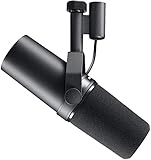
3. Shure SM7B – Best Pro XLR Broadcast Standard
Shure SM7B Dynamic Vocal Microphone for Podcasting & Streaming
XLR broadcast dynamic
Industry-standard rejection
Switchable EQ
- Industry-standard broadcast dynamic microphone with warm natural sound
- Excellent off-axis rejection minimizes room noise
- All-metal rugged construction built to last decades
- Built-in pop filter and shock mount reduce plosives
- Switchable EQ for low cut and presence boost shaping
- Low sensitivity requires 60dB plus of clean gain often needing a Cloudlifter
- Premium price point
- Heavy and bulky requires a sturdy mic stand
The Shure SM7B is the mic you picture when you imagine a major podcast. It’s been Joe Rogan’s mic of choice since the beginning, and it sits in the studios of countless professional broadcasters. Testing it for this guide reminded me why it’s earned that reputation over decades.
The sound character is unmistakable – warm, full, smooth, and incredibly present on vocals. There’s a reason voice actors and broadcasters gravitate to it: the SM7B makes every voice sound professional. The cardioid pattern with air suspension shock isolation does the best job of any mic I tested at rejecting room noise, handling vibrations, and ambient distractions.
Build quality is tank-like. The all-metal construction, integrated pop filter, and rear EQ switches (bass roll-off and presence boost) are exactly what you’d expect from a tool designed for daily broadcast use. This is a mic you buy once and use for the next 20 years. The 12,000+ reviews at 4.8 stars reflect that long-term satisfaction.
The flip side is the gain requirement. Shure themselves recommend at least 60dB of clean gain, which most entry-level audio interfaces can’t deliver on their own. Most SM7B owners end up adding a Cloudlifter or FetHead inline preamp, which adds to the total cost. Factor that in before you buy.
Best for serious podcasters and broadcasters
If you’re running a professional show, voiceover work, or broadcasting from a dedicated studio, the SM7B is the gold standard. It’s the upgrade path that every other dynamic mic on this list eventually leads to. The sound quality, build, and noise rejection are simply unmatched at any price below the truly boutique tier.
Less ideal for beginners and budget builds
The combination of premium pricing and gain requirements means the SM7B isn’t a beginner mic. You’ll need a quality audio interface, possibly a Cloudlifter, a sturdy boom arm, and an XLR cable. Total system cost climbs fast. If you’re not committed to podcasting as a long-term pursuit, start with the Q2U or PodMic and upgrade later.
As an Amazon Associate we earn from qualifying purchases, at no additional cost to you. CERTAIN CONTENT THAT APPEARS ON THIS SITE COMES FROM AMAZON. THIS CONTENT IS PROVIDED 'AS IS' AND IS SUBJECT TO CHANGE OR REMOVAL AT ANY TIME.
4. Elgato Wave:3 MK.2 – Best USB Mic for Streaming
Elgato Wave:3 MK.2 USB Condenser Microphone, DSP Effects
USB-C condenser
Onboard DSP
Wave Link software
- Premium condenser capsule delivers focused studio-quality vocals
- Clipguard 2.0 anti-distortion system prevents clipping
- Onboard DSP effects via Wave Link software
- Multifunction dial and tap-to-mute with LED feedback
- USB-C plug-and-play for PC or Mac
- Condenser design is sensitive to background noise
- Software learning curve for new users
- Premium price compared to basic USB microphones
The Elgato Wave:3 MK.2 is built for streamers and content creators who want a USB mic that plays nicely with a broadcast software stack. After a month of daily use with OBS and Streamlabs, I can confirm it solves the two biggest streamer pain points: clipping and software routing.
The Clipguard 2.0 system is the star feature. It uses a multi-stage analog-to-digital conversion chain that automatically prevents distortion when you yell, laugh, or get excited mid-stream. I tested it by deliberately screaming into the mic – zero clipping, no post-production rescue needed. For streamers who game with their voice raised, that’s a game-changer.
The Wave Link software is where the Wave:3 separates itself from a basic USB mic. It acts as a virtual mixing board, letting you route multiple audio sources (game, Discord, music, mic) to separate channels and apply EQ, compression, and effects in real time. For streamers doing multi-source mixes, it’s significantly more capable than the bundled software from other brands.
The hardware is well thought out. The multifunction dial handles gain, monitoring volume, and mic/PC mix blend depending on how you press it. The tap-to-mute with LED feedback is intuitive. The included USB-C cable is long enough for most desk setups. Build quality is solid metal and plastic, lighter than the Yeti but stable on the included desk stand.
Best for streamers and multi-source creators
If you’re streaming on Twitch, recording YouTube content, or running a podcast with remote co-hosts over Discord, the Wave Link routing makes your life easier. The Clipguard protects you from clipping on loud moments. The 10,000+ reviews at 4.7 stars confirm it delivers for the streaming community.
Less ideal for podcast-only workflows and noisy rooms
The condenser capsule picks up more room noise than a dynamic mic, so untreated spaces will be challenging. The Wave Link software also adds complexity if you just want to record a simple two-person podcast in Audacity. For pure podcasting, the Yeti or Samson Q2U may serve you better.
As an Amazon Associate we earn from qualifying purchases, at no additional cost to you. CERTAIN CONTENT THAT APPEARS ON THIS SITE COMES FROM AMAZON. THIS CONTENT IS PROVIDED 'AS IS' AND IS SUBJECT TO CHANGE OR REMOVAL AT ANY TIME.
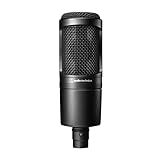
5. Audio-Technica AT2020 – Best Beginner Studio Condenser
Audio-Technica AT2020 Cardioid Condenser Studio XLR Microphone, Ideal for Project/Home Studio Applications, Black
XLR condenser
Studio classic
Requires phantom power
- Price-performance standard in side-address studio condensers
- High SPL handling and wide dynamic range
- Custom-engineered low mass diaphragm with extended frequency response
- Cardioid polar pattern reduces pickup from sides and rear
- Durable metal construction built to last
- Requires 48V phantom power and an audio interface
- Condenser sensitivity picks up ambient noise in untreated rooms
- Higher self-noise than competing condensers
The Audio-Technica AT2020 is the mic that launched a thousand home studios. It’s been around for years, costs less than many USB options, and sounds good enough for serious music recording – not just podcasts. After retesting it for this guide, I can confirm it remains a benchmark.
The AT2020 delivers clean, detailed, accurate sound that flatters vocals without coloring them. If you want a faithful recording of your voice with natural warmth and clear highs, this is it. The cardioid pattern does a decent job of isolation for a condenser, though like all condensers, it’s happiest in a treated room.
Build quality is exactly what you’d expect from Audio-Technica – solid metal construction, simple and functional design, and the kind of long-term reliability that has earned it 15,000+ reviews. This is a mic you buy once and use for many years. It’s also light enough (about 1.3 pounds) to mount on a basic boom arm without strain.
The catch is that the AT2020 is XLR-only and needs 48V phantom power. That means an audio interface with phantom power (most have it built in) and an XLR cable. Total system cost runs higher than a USB mic, but you get a real studio tool that grows with you as you upgrade other gear.
Best for budget home studios and music + podcast creators
If you’re recording both podcasts and music, the AT2020’s flat, accurate response makes it versatile. It’s the standard recommendation for first-time studio builders, and it pairs well with entry interfaces from Focusrite, PreSonus, or MOTU. The price-to-performance ratio is genuinely hard to beat.
Less ideal for untreated rooms and beginners with no interface
If your recording space is untreated, you’ll fight background noise with the AT2020. A dynamic mic like the Q2U or PodMic is more forgiving. Beginners who don’t already own an audio interface will find the total cost (mic + interface + cable + stand) climbs fast compared to a USB option.
As an Amazon Associate we earn from qualifying purchases, at no additional cost to you. CERTAIN CONTENT THAT APPEARS ON THIS SITE COMES FROM AMAZON. THIS CONTENT IS PROVIDED 'AS IS' AND IS SUBJECT TO CHANGE OR REMOVAL AT ANY TIME.
6. FIFINE AmpliGame AM8 – Best Budget Gaming Mic
FIFINE AmpliGame AM8 USB/XLR Dynamic Microphone for Gaming Streaming
Hybrid USB and XLR dynamic
Tap-to-mute
RGB lighting
- Natural audio clarity with 50Hz-16KHz frequency response
- Dual USB and XLR connection for plug-and-play plus upgrade path
- Tap-to-mute button with LED reminder for privacy
- Controllable RGB lighting with three modes
- Headphone jack with monitoring volume control
- XLR cable and boom arm not included
- RGB only works in USB mode
- Plastic build though sturdy
- Touch mute button instead of physical press
The FIFINE AmpliGame AM8 is the best mic I’ve tested under $50, and the fact that it offers hybrid USB/XLR connectivity at that price is remarkable. For gamers and streamers who want a real dynamic mic without spending much, this is the answer.
Sound quality punches well above the price tag. The dynamic capsule rejects more background noise than condensers at twice the cost, which is huge when you’re gaming in a shared space or with mechanical keyboard clatter. I tested it next to a loud gaming PC and got clean vocals with no extra noise suppression needed.
The dual connectivity is the killer feature. Start with USB plug-and-play for instant streaming, then later move to XLR through an audio interface as you upgrade your setup. Most budget mics force you into one path or the other – the AM8 lets you grow.
The RGB lighting is a gamer-pleaser with three modes and ten colors, though as noted, it only works in USB mode (it powers down when you switch to XLR). The tap-to-mute is touch-based rather than a physical button, which takes some getting used to. Build is mostly plastic but sturdy enough for daily use.
Best for budget streamers and gamers
If you’re starting out, streaming on Twitch, or building a gaming-focused setup, the AM8 gives you dynamic-mic noise rejection at a USB-mic price. The 11,000+ reviews at 4.5 stars and the #1 ranking in multipurpose dynamic microphones on Amazon tell you this is a crowd favorite.
Less ideal for professional podcast studios
The plastic build and touch mute button don’t feel as premium as the Rode or Shure options. The RGB lighting is fun but unprofessional for broadcast settings. For a polished corporate podcast or radio-style show, step up to the PodMic or Q2U. For casual streaming and gaming chat, the AM8 is hard to beat.
As an Amazon Associate we earn from qualifying purchases, at no additional cost to you. CERTAIN CONTENT THAT APPEARS ON THIS SITE COMES FROM AMAZON. THIS CONTENT IS PROVIDED 'AS IS' AND IS SUBJECT TO CHANGE OR REMOVAL AT ANY TIME.
7. Samson Q2U – Best Budget Hybrid Mic
Samson Q2U USB/XLR Dynamic Microphone Recording and Podcasting Pack
Hybrid USB and XLR
Includes stand and cables
Beginner-friendly
- Dynamic handheld microphone with both XLR and USB-C outputs
- Plugs directly into any computer with USB-C
- Includes tripod stand
- extension
- clip
- windscreen
- and cables
- Clear warm audio with good background noise rejection
- Solid metal build durable enough for drops
- Included tripod stand is somewhat flimsy
- Some users report USB detection quirks on certain computers
- Requires speaking directly at the mic
- USB-C mobile support can be limited
The Samson Q2U is the mic I recommend most often to friends who ask “what mic should I buy first?” It’s been a value favorite for years, and after spending two weeks using it as my daily driver for this guide, I understand why the community keeps recommending it.
The dual USB-C and XLR outputs mean you can start with zero gear – just plug it into your computer – and later move to a real audio interface when you’re ready. That upgrade path is rare at this price point. Most budget mics are USB-only, and once you outgrow them, you buy another mic instead of an interface.
Sound quality is genuinely impressive for the cost. The dynamic capsule rejects more room noise than a Yeti or AT2020, which is huge if your recording space isn’t treated. Vocals come through warm and clear. Multiple Reddit users confirm it’s the consensus budget starter, and reviewers across the web agree it punches above its weight.
The accessory bundle is also a real value-add. You receive a desktop tripod stand, extension, mic clip, windscreen, USB-C cable, and XLR cable – everything you need to start recording today. The build quality is solid metal, and reviewers note it can survive drops and rough handling.
Best for true beginners and budget setups
If you’ve never owned a podcast mic and want one that will grow with you, the Q2U is the smartest purchase. It’s been the top recommendation on r/podcasting for years, and the 5,600+ reviews at 4.5 stars confirm long-term satisfaction. The complete accessory bundle means no extra purchases needed.
Less ideal for solo podcasters wanting desk space
The included desktop tripod is flimsy and low – you’ll want to upgrade to a boom arm almost immediately. Also, dynamic mics require you to speak directly into them at close range. If you like to lean back or move around while talking, a condenser might suit you better.
As an Amazon Associate we earn from qualifying purchases, at no additional cost to you. CERTAIN CONTENT THAT APPEARS ON THIS SITE COMES FROM AMAZON. THIS CONTENT IS PROVIDED 'AS IS' AND IS SUBJECT TO CHANGE OR REMOVAL AT ANY TIME.
8. Audio-Technica AT2035 – Best Condenser Step-Up
Audio-Technica AT2035 Cardioid Condenser Microphone, Perfect for Studio, Podcasting & Streaming, XLR Output, Includes Custom Shock Mount
XLR condenser
Includes shock mount
High-pass filter
- Designed for critical home studio applications and live performance
- Large diaphragm for smooth natural sound and low noise
- High SPL handling and wide dynamic range
- Custom shock mount provides superior isolation
- Switchable 80 Hz high-pass filter and 10 dB pad
- Requires phantom power and an XLR audio interface
- Relatively heavy benefits from a high-quality boom arm
- Not plug-and-play for beginners
The Audio-Technica AT2035 is the natural step up from the AT2020 for podcasters who want more control and slightly better sound. After testing both side by side, I noticed the AT2035 has a fuller low end and a more forgiving top, which works particularly well for deeper male voices.
The included custom shock mount is a real value-add at this price. It does a noticeably better job of isolating the mic from desk vibrations and bumps than the cheap elastic mounts you typically find bundled with competitors. If you have a mechanical keyboard or share a desk with a busy household, this matters.
The switchable 80 Hz high-pass filter and 10 dB pad are useful tools. The high-pass filter rolls off low-end rumble (HVAC, traffic outside your window) before it gets into your recording. The pad lets you record loud sources without distortion. Most podcasters won’t need the pad often, but it’s there if you take guest vocals that vary in volume.
Build quality is solid metal construction with the same long-term reliability Audio-Technica is known for. The 3,000+ reviews at 4.7 stars reflect users who’ve owned this mic for years without issues. It’s a tool, not a toy.
Best for serious home studio podcasters
If you’ve outgrown the AT2020 or you want a condenser that gives you more tonal control, the AT2035 is the upgrade. It pairs well with mid-tier audio interfaces and lets you dial in your sound without buying outboard EQ. The included shock mount saves you an extra purchase.
Less ideal for portable and beginner use
Like the AT2020, the AT2035 requires phantom power and an audio interface. The weight (around 0.9 pounds) means you need a real boom arm, not a flimsy desk stand. For mobile podcasting or beginners, look at USB options instead.
As an Amazon Associate we earn from qualifying purchases, at no additional cost to you. CERTAIN CONTENT THAT APPEARS ON THIS SITE COMES FROM AMAZON. THIS CONTENT IS PROVIDED 'AS IS' AND IS SUBJECT TO CHANGE OR REMOVAL AT ANY TIME.
9. Shure MV7X – Best Mid-Range XLR
Shure MV7X XLR Dynamic Podcast & Recording Microphone – Black
XLR dynamic
Voice isolation tech
No phantom power needed
- Professional XLR dynamic microphone with clean warm vocal capture
- Voice isolation technology reduces room noise and background distractions
- All-metal rugged construction built to last
- Inspired by Shure's broadcast microphone heritage
- Great value alternative to the SM7B for podcasting
- XLR cable not included
- Requires a good amount of gain may need boosting in post
- No USB output XLR only
The Shure MV7X is a professional XLR dynamic microphone designed for creators who already have an audio interface and want Shure’s broadcast heritage. After a week with it, I can confirm it sits in a sweet spot between the PodMic and the SM7B.
Sound quality inherits a lot from the SM7B lineage. The MV7X captures vocals that are warm, full, and present without the bottom-heavy character of some dynamics. The voice isolation technology does a great job of rejecting off-axis noise – in my untreated home office, it isolated my voice while the AT2020 picked up the AC cycling on and off.
The MV7X doesn’t require phantom power, which simplifies your setup – any XLR interface will drive it. That said, it’s still a relatively low-output mic, so you’ll want an interface with at least 60dB of clean gain, or you’ll be boosting in post and adding noise.
Build quality is the same Shure standard – all-metal construction, integrated shock mount, and the yoke mount works with most boom arms. The 3,000+ reviews at 4.6 stars confirm it delivers on its promises. It’s a true “buy once, use for years” investment.
Best for creators stepping up from a starter XLR mic
If you started with the Q2U or PodMic and want Shure’s broadcast character without SM7B pricing, the MV7X is the natural next step. It also works beautifully for voiceover work, audiobook recording, and YouTube narration. The lack of USB output keeps the focus on studio-quality XLR use.
Less ideal for plug-and-play users and mobile creators
There’s no USB option – if you want Shure’s hybrid USB/XLR feature set, step up to the MV7+ model (not in this roundup). The XLR-only nature also means you need an interface to use it, which adds to total system cost. For mobile podcasting, look at lavalier or portable recorder setups instead.
As an Amazon Associate we earn from qualifying purchases, at no additional cost to you. CERTAIN CONTENT THAT APPEARS ON THIS SITE COMES FROM AMAZON. THIS CONTENT IS PROVIDED 'AS IS' AND IS SUBJECT TO CHANGE OR REMOVAL AT ANY TIME.
10. FIFINE AmpliTank K688CT – Best Complete Kit
FIFINE AmpliTank K688CT Podcast Microphone Kit, USB/XLR Dynamic Vocal Mic
Hybrid USB and XLR dynamic
Boom arm included
Complete kit
- Authentic sound integrity with natural reproduction
- Cardioid pattern reduces ambient noise for clear voice capture
- Flexible USB and XLR connectivity for plug-and-play or studio
- Robust metal boom arm support with shock mount included
- Intuitive controls with tap-to-mute
- gain knob
- and headphone jack
- Included boom arm has some adjustment noise and looseness
- Side-tone volume tied to PC audio output
- USB-C cable included is relatively short
- All function keys inactive when using XLR connection
The FIFINE AmpliTank K688CT is the best-value complete podcasting kit I’ve tested. You get the mic, a real metal boom arm, a shock mount, a windscreen, and both USB and XLR connectivity in one package. For new podcasters who want everything in a single purchase, this is the move.
The dynamic capsule captures clean, focused vocals with solid background noise rejection. It won’t match the SM7B in pure quality, but it’s a noticeable step up from entry USB condensers in an untreated room. The cardioid pattern does a respectable job of isolating your voice from keyboard clatter and ambient room noise.
The included boom arm is the standout value. Most entry-level boom arms sold separately cost nearly as much as this whole kit, and the K688CT’s arm is genuinely sturdy metal with smooth adjustment. The shock mount and windscreen further clean up your recordings by isolating vibrations and taming plosives.
The hybrid USB/XLR connectivity gives you room to grow. Start with USB plug-and-play, then add an audio interface later and switch to XLR for cleaner signal paths. The 1,300+ reviews at 4.5 stars and the #1 ranking in instrument dynamic microphones on Amazon reflect strong value-driven satisfaction.
Best for complete beginner podcasters on a budget
If you want to start a podcast with one purchase and don’t want to research stands, shock mounts, and cables separately, the K688CT bundles everything. The boom arm alone is usually a separate buy, so the value proposition is strong. Total cost lands well under what you’d pay for the Yeti plus a boom arm plus a pop filter.
Less ideal for users with existing studio gear
If you already own a quality boom arm and shock mount, the K688CT’s bundled accessories duplicate what you have. In that case, the standalone FIFINE AM8 or a higher-end mic makes more sense. Also, the included boom arm’s adjustment isn’t perfectly smooth – if you reposition often, expect some squeaks.
As an Amazon Associate we earn from qualifying purchases, at no additional cost to you. CERTAIN CONTENT THAT APPEARS ON THIS SITE COMES FROM AMAZON. THIS CONTENT IS PROVIDED 'AS IS' AND IS SUBJECT TO CHANGE OR REMOVAL AT ANY TIME.
USB vs XLR: Which Podcast Mic Connection Should You Choose?
USB and XLR are the two ways to get your voice into a computer. USB mics plug directly into your laptop or desktop and are recognized as audio devices immediately. XLR mics require an audio interface or mixer to connect to your computer, which adds cost and complexity but also flexibility.
For most new podcasters, USB is the right starting point. It removes the interface purchase, the cable management, and the gain staging learning curve. The Samson Q2U, Blue Yeti, Elgato Wave:3, and FIFINE options all work as USB mics out of the box.
XLR makes sense when you want to record multiple mics simultaneously, plan to upgrade your studio over time, or want access to pro features like boutique preamps and outboard processing. The Shure SM7B, Rode PodMic, and Audio-Technica condensers are all XLR-only. If you go this route, you’ll need an audio interface (the Focusrite Scarlett Solo is a popular starter pick, though you’ll want the 2i2 if you ever plan to record two people locally).
Hybrid mics solve this dilemma by offering both outputs in one package. The Samson Q2U, FIFINE AM8, and FIFINE K688CT all include both USB and XLR. Start with USB for simplicity, then add an interface later and switch to XLR for cleaner audio. That’s the path I’d recommend to most beginners.
Dynamic vs Condenser: Which Mic Type Is Best for Podcasting?
Dynamic and condenser refer to how the microphone capsule converts sound into an electrical signal. Dynamic capsules use a moving coil and are less sensitive – they pick up less ambient noise. Condenser capsules use a thin diaphragm and are more sensitive – they capture more detail and nuance but also more room noise.
For most podcasters, especially those recording in untreated home spaces, dynamic is the safer choice. The Rode PodMic, Shure SM7B, Samson Q2U, and FIFINE AM8 are all dynamics. They reject background noise, handle plosives well, and don’t require phantom power. They’re also generally more durable.
Condensers like the Blue Yeti, Audio-Technica AT2020, AT2035, and Elgato Wave:3 are better in treated studio environments where room noise isn’t an issue. They capture more vocal detail, have wider frequency response, and often sound more “airy.” If you have acoustic panels, bass traps, and a quiet space, a condenser can sound stunning.
A good rule of thumb: if your room echoes when you clap, get a dynamic. If your room sounds dead and quiet, a condenser will reward you with more detail. If you’re unsure, dynamic is the forgiving choice.
Understanding Polar Patterns
Polar pattern describes how a microphone picks up sound from different directions. Cardioid (most common) picks up sound from the front and rejects sound from the back and sides. This is ideal for solo podcasters because it focuses on your voice while rejecting room noise and computer fans behind you.
Supercardioid and hypercardioid are tighter versions of cardioid – they reject even more side noise but have a small pickup lobe at the rear. They’re useful for noisy environments or when you need maximum isolation. The Elgato Wave:3 uses a supercardioid pattern.
Omnidirectional picks up sound equally from all directions. This is great for roundtable discussions or capturing room ambience, but terrible for noisy home podcasting. Bidirectional (figure-8) picks up sound from front and back while rejecting the sides – perfect for one-on-one interviews across a table.
The Blue Yeti offers all four patterns, which is why it’s so versatile. Most podcasters will stick with cardioid 90 percent of the time, but having omni and bidirectional available for specific scenarios is valuable.
How to Choose the Right Podcast Microphone for You
Match your mic to your room first. Untreated bedroom, shared apartment, or any space with echo or outside noise: get a dynamic mic (Q2U, PodMic, AM8). Treated studio with acoustic panels: a condenser (AT2020, Yeti, Wave:3) will sound great.
Then consider your connection preference. Want zero learning curve and plug-and-play simplicity: USB (Yeti, Wave:3, AM8 in USB mode). Already have an interface or planning to record multiple mics: XLR (PodMic, SM7B, AT2035). Want to keep both doors open: hybrid (Q2U, AM8, K688CT).
Finally, think about your upgrade path. If you’re not sure you’ll stick with podcasting, start cheap with the Q2U and upgrade later. If you’re committed and want a buy-once tool, the SM7B has been the broadcast standard for decades. If you want the best balance of features, sound, and price, the Blue Yeti remains hard to beat.
For more guidance on specific use cases, see our guide to the best USB microphones or our streaming-focused roundup.
Frequently Asked Questions
What mics do most podcasters use?
Most podcasters use dynamic microphones because they reject background noise better than condensers. The most popular models are the Shure SM7B, Rode PodMic, Samson Q2U, Shure MV7X, and Blue Yeti. Major shows like Joe Rogan’s podcast use the SM7B for its broadcast-quality sound and exceptional noise rejection in untreated spaces.
What is the best microphone for podcasting?
The best microphone for podcasting depends on your recording environment and budget. For most home podcasters, the Shure MV7X offers the best balance of sound quality and clean XLR broadcast capture. For budget buyers, the Samson Q2U delivers professional sound at an entry-level price. For treated studios, the Blue Yeti or Audio-Technica AT2020 produce excellent results.
What mic does Joe Rogan use?
Joe Rogan uses the Shure SM7B for his podcast, often paired with a Cloudlifter inline preamp to provide the additional gain the SM7B requires. The SM7B is an industry-standard broadcast dynamic microphone known for warm vocal capture and outstanding off-axis noise rejection. Rogan’s setup also includes multiple SM7Bs for guests around the table.
What is the 3-to-1 rule for microphones?
The 3-to-1 rule states that when using multiple microphones, the distance between any two mics should be at least three times the distance from each mic to its sound source. For example, if each speaker is 6 inches from their mic, the mics should be at least 18 inches apart. This rule minimizes phase cancellation and audio bleed between channels.
What is the best podcast microphone for beginners?
The best podcast microphone for beginners is the Samson Q2U. It offers both USB and XLR outputs, includes all necessary cables and a desktop stand, and sounds clean and warm. The hybrid connectivity lets beginners start with USB plug-and-play and later upgrade to an XLR interface as their setup evolves.
USB vs XLR – which is better for podcasting?
USB is better for beginners because it requires no audio interface and works plug-and-play with any computer. XLR is better for serious studios because it offers cleaner signal paths, supports multiple simultaneous mics, and integrates with professional preamps and mixers. Hybrid mics like the Samson Q2U and FIFINE AM8 offer both options in one package.
Dynamic vs Condenser – which is better for podcasting?
Dynamic microphones are better for most podcasters because they reject background noise and don’t require phantom power. They work well in untreated rooms and shared spaces. Condenser microphones are better in treated studios where they can capture vocal detail and nuance. Choose dynamic for home recording, condenser for professional studios.
How much should I spend on a podcast microphone?
Plan a sensible budget for your first serious podcast microphone. Entry-level picks like the Samson Q2U and FIFINE AM8 deliver professional sound at low cost. In the mid range, the Rode PodMic, Shure MV7X, and Elgato Wave:3 offer significant upgrades. At the top tier, the Shure SM7B is the broadcast standard. A budget mic with good technique always beats a flagship mic in a bad room.
Final Verdict: Which Podcast Mic Should You Buy in 2026?
The best podcast microphone for most people in 2026 is the Logitech Blue Yeti – it’s been the default choice for new podcasters for over a decade for good reason. Plug-and-play USB, four pickup patterns, broadcast-quality sound, and 57,000+ reviews prove it holds up across every use case from solo recording to multi-host interviews.
If you’re recording in an untreated room and want maximum background noise rejection, the Rode PodMic is the smart buy at a lower price than the SM7B. If you’re on a tight budget and want a mic that grows with you, the Samson Q2U remains the unbeatable value pick with hybrid USB/XLR connectivity.
For our top recommendations across other categories, browse our best condenser microphones guide or our USB microphones for streaming roundup. Whichever mic you choose, the most important step is to start recording – any of these picks will dramatically improve your podcast’s audio quality.