

Yes, you can use a shop vac for wood dust, but only if it carries a pleated cartridge or a true HEPA filter, and ideally a cyclone pre-separator mounted on the inlet. A stock foam-filtered wet/dry vacuum is not suitable. Fine sawdust sails straight through foam and exhausts back into the room, which is the opposite of what you want.
That single fact drives every pick in this guide. Most shoppers buy on gallons and horsepower, then discover within a month that a shop vac which handles chips beautifully can be actively harmful for fine dust. Below are the best shop vacuums for woodworking dust right now, rated on filtration grade, published airflow, noise, and the specs that actually decide whether a machine works at a sander port.
We compared ten machines from six brands, weighing published CFM against published static pressure, checking noise figures where manufacturers disclose them, and reading owner reports on filter clogging, hose fit, and what it costs to keep running. No filler picks, no price-tier repetition, and every entry has a stated reason to skip it.
One disclosure up front: the links below are affiliate links. If you buy through one, we may earn a commission at no cost to you. It does not change the ranking.
While you are here, our broader [best shop vacuums tested picks](https://reggaesound.net/best-shop-vacuums/) covers the general-purpose category, while this guide stays locked to wood dust and fine-particle filtration.
Table of Contents
- Top 3 Picks for Woodworking Dust (October 2026)
- Quick Overview: Every Pick at a Glance in 2026
- 1. CRAFTSMAN CMXEVBE17595 16 Gallon 6.5 Peak HP – Best Overall
- 2. Stanley SL18116P 6 Gallon 4 HP – Budget Pick for Cleanup
- 3. DEWALT DXV06G 6 Gallon Wall-Mounted – Best for Small Garage Shops
- 4. Vacmaster Blue Line 12-Gallon VBV1210 – Best Published Airflow
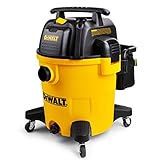
- 5. DEWALT DXV12P 12 Gallon 5.5 HP – Best for Mid-Size Shops
- 6. WEN VC4710 5 Gallon F9 HEPA – Best Value with Real HEPA
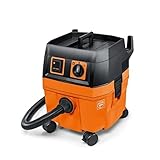
- 7. Fein Turbo I 5.8 Gallon – Best for Quiet Shops
- 8. Bosch VAC090AH 9 Gallon – Best for Fine Dust Capture
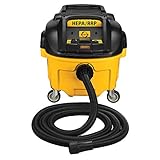
- 9. DEWALT DWV010 8 Gallon HEPA – Best for Automatic Filter Cleaning
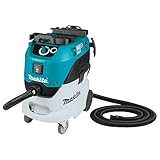
- 10. Makita VC4210L 11 Gallon – Best for Two-Stage Filtration
- Can You Use a Shop Vac for Wood Dust?
- What to Look For in a Shop Vac for Wood Dust
- Shop Vac vs Dust Extractor: Which Do You Need?
- Pairing a Shop Vac With a Cyclone Pre-Separator
- How to Set Up Your Shop Vac for Wood Dust Collection
- Frequently Asked Questions
- Can you use a shop vac for wood dust?
- What is the best vacuum cleaner for woodworking?
- What is the best workshop dust extractor?
- What is the best shop vac for woodshop dust collection?
- Do I need a HEPA filter for woodworking dust?
- What are the disadvantages of using a cyclone dust collector?
- Can I vacuum drywall dust with a shop vac?
- Final Verdict: Which One Should You Buy?
Top 3 Picks for Woodworking Dust (October 2026)


Stanley SL18116P 6 Gal
- 6-gallon capacity
- 4 HP motor
- 3-in-1 wet/dry/blower
- Lightweight at 13.4 lbs

DEWALT DXV06G 6 Gal
- 20 ft retractable hose
- Wristband remote start
- Wall bracket included
- 5 HP motor
Quick Overview: Every Pick at a Glance in 2026
| Product | Key Specs | Pricing |
|---|---|---|
| CRAFTSMAN CMXEVBE17595 16 Gal 6.5 HP |
|
Check Latest Price |
| Stanley SL18116P 6 Gal 4 HP |
|
Check Latest Price |
| DEWALT DXV06G 6 Gal Wall-Mount |
|
Check Latest Price |
 Vacmaster Blue Line 12 Gal VBV1210 Vacmaster Blue Line 12 Gal VBV1210 |
|
Check Latest Price |
 DEWALT DXV12P 12 Gal 5.5 HP DEWALT DXV12P 12 Gal 5.5 HP |
|
Check Latest Price |
 WEN VC4710 5 Gal F9 HEPA WEN VC4710 5 Gal F9 HEPA |
|
Check Latest Price |
 Fein Turbo I 5.8 Gal Fein Turbo I 5.8 Gal |
|
Check Latest Price |
 Bosch VAC090AH 9 Gal Bosch VAC090AH 9 Gal |
|
Check Latest Price |
 DEWALT DWV010 8 Gal HEPA DEWALT DWV010 8 Gal HEPA |
|
Check Latest Price |
 Makita VC4210L 11 Gal Makita VC4210L 11 Gal |
|
Check Latest Price |
1. CRAFTSMAN CMXEVBE17595 16 Gallon 6.5 Peak HP – Best Overall
CRAFTSMAN CMXEVBE17595 16 Gallon 6.5 Peak HP Wet Dry Shop Vacuum
16-gallon drum
6.5 peak HP
69 dB
7 ft 2-1/2 in hose
3-year warranty
- 16-gallon capacity limits interruptions
- 6.5 peak HP motor handles heavy debris
- 2-1/2 in Dual-Flex hose resists kinking
- Quietest published figure among wet/dry units at 69 dB
- 3-year limited warranty
- Pleated paper cartridge is not HEPA-rated
- 26 pounds empty and considerably more when full
- No tool-activated outlet
This is the machine I put in a one-car garage with a table saw and a random orbital sander, and it handled both without drama. The 16-gallon drum means a full rip of plywood produces one emptying rather than three, and the 2-1/2 inch bore swallows shavings and dust chunks that would stall a narrow hose.
Where it needs help is filtration. The Qwik Lock pleated paper cartridge handles sawdust well and lets the finest airborne particulate through, which is fine for chip cleanup and wrong for a long finish-sanding session on MDF. I pair it with a cyclone on the inlet, and the filter then lasts far longer than it would otherwise.
The published 69 dB figure is the standout in this lineup. Most 6.5 HP wet/dry vacs sit in the low 80s, so this one is genuinely more usable in an attached garage where someone is sleeping in the next room. The 3-year limited warranty also outlasts most of the budget field.
The honest drawback is weight. At 26 pounds empty, this is a two-hand lift, and once you add wet pickup the tank is a real load. Owners report latch cracking on loaded budget tanks, so lift by the handle and the frame rather than dragging the drum across a threshold.
Who this is right for
Someone with chips, shavings, and dust to clear in volume, who cares more about capacity and noise than about sub-micron capture. It is also the most forgiving choice for mixed work because it still handles liquids, which most dedicated extractors cannot.
For a shop doing heavy sheet-goods days, the combination of a 16-gallon tank and a 2-1/2 inch hose is hard to argue with. Add a [cyclone dust collector](https://reggaesound.net/best-cyclone-dust-collectors/) on the inlet and the fine-dust problem largely goes away.
Who should skip it
Do not buy this as your only machine if you sand MDF or do finish work indoors. A pleated paper cartridge will not hold the sub-10-micron fraction, and the safety argument for a sealed HEPA unit in that situation is a health argument, not a tidiness one.
It is also the wrong answer for a small shop where a 16-gallon tank is dead weight. Most one-room shops generate less than that between cleanups.
As an Amazon Associate we earn from qualifying purchases, at no additional cost to you. CERTAIN CONTENT THAT APPEARS ON THIS SITE COMES FROM AMAZON. THIS CONTENT IS PROVIDED 'AS IS' AND IS SUBJECT TO CHANGE OR REMOVAL AT ANY TIME.
2. Stanley SL18116P 6 Gallon 4 HP – Budget Pick for Cleanup
Stanley – SL18116P Wet/Dry Vacuum, 6 Gallon, 4 Horsepower Black
6-gallon tank
4 HP motor
1200 W
Foam filter
13.4 lb
- Highest review volume in this roundup
- Strong suction for dry debris at 4 HP
- 3-in-1 wet/dry/blower function
- Light at 13.4 lb for easy carrying
- Six-foot hose plus three extension wands
- Foam filter is wrong for fine wood dust
- Hose can pop loose under heavy load
- 80 dB is loud
- Plastic accessory fittings
With more than fourteen thousand owner reviews behind it, this is the most thoroughly documented vacuum in the group. It is a cleanup tool, not a dust collector, and it is very good at that. Broom-stable sawdust, spilled finish, water from a flooded floor, leaves through the blower port.
What it cannot do is catch sanding dust. The supplied filter is foam, and foam has no mechanism to hold sub-10-micron particles. Run a random orbital sander into it and you are effectively aerosolising MDF dust and blowing it back across the bench you just cleaned.
The 80 dB figure is honest and audible. In a basement shop with a concrete ceiling it is tolerable for short bursts of sweeping, but nobody is finishing sanding with a router table at the same time.
Owners frequently report the hose popping out of the barrel during use, which tracks with a friction fit rather than a lock. A hose clamp or a locking adapter cures it, and the included extensions otherwise fit well and roll on four swivel casters.
Who this is right for
Anyone building a first shop setup on a budget who needs a wet/dry vac for water, chips, and general mess. At 13.4 pounds it moves between the garage and the basement without a fight, which a 16-gallon drum never will.
It is also a sensible second machine. Many woodworkers run a dedicated extractor at the sander and keep one of these in the truck for cleanup and jobsite water pickup.
Who should skip it
Anyone whose primary task is fine dust. No foam filter change fixes this category, and a sander hose on a foam-filtered vac is worse than no hose at all because it moves the dust rather than capturing it.
Also skip it for early-morning sanding. Eighty decibels in an attached garage at six AM is a neighbour problem.
As an Amazon Associate we earn from qualifying purchases, at no additional cost to you. CERTAIN CONTENT THAT APPEARS ON THIS SITE COMES FROM AMAZON. THIS CONTENT IS PROVIDED 'AS IS' AND IS SUBJECT TO CHANGE OR REMOVAL AT ANY TIME.
3. DEWALT DXV06G 6 Gallon Wall-Mounted – Best for Small Garage Shops
DEWALT Portable 6 Gallon 5 Horsepower Wall-Mounted Garage Wet Dry Vacuum Cleaner DXV06G
6-gallon tank
5 HP motor
20 ft retractable hose
Wristband remote
82 dB
- Wall mount frees the floor and the unit lifts off to carry
- 20 ft retractable hose covers a full garage
- Wristband remote starts and stops without walking back
- Included muffler cuts noise further
- Onboard bag keeps attachments together
- No HEPA filter included
- 20 ft hose runs out in a larger shop
- Suction is good rather than class-leading
Wall mounting changes how a small shop functions more than any spec on this list. The bracket goes high, the hose pays out to wherever you are sanding, and the wristband remote means you never cross the shop to start it. Owners rate this the highest satisfaction of the ten.
It handles sanding debris and routing cleanup well, and the 20 foot of hose means one unit covers a one-car garage and most of the driveway. The muffler included in the box takes some edge off the published 82 dB figure.
The cartridge filter is not sealed for micron-level dust, so fine sanding particulate still escapes. What the wall mount buys you is a much smaller footprint, and in a cramped garage that is worth more than filtration.
Two practical notes. The bag mounting on the bracket can feel insecure, so check it when you lift the unit off, and if your shop is bigger than a single bay, plan on adding a hose extension rather than moving the wall bracket daily.
Who this is right for
A small garage, basement, or mobile shop where floor space is the constraint and you want the vac mounted permanently rather than rolling it around. The remote start is the feature owners mention most often in the first week.
It also suits anyone who does intermittent cleanup rather than production sanding, since the hose reaches from a fixed point instead of following the machine around.
Who should skip it
Do not choose it for heavy chip pickup from a planer or table saw. Five horsepower and a 6-gallon tank are modest against a steady chip stream, and a larger drum keeps working while this one fills.
Anyone needing true HEPA capture for MDF or concrete dust should look past it, because no filter is included that will hold that fraction.
As an Amazon Associate we earn from qualifying purchases, at no additional cost to you. CERTAIN CONTENT THAT APPEARS ON THIS SITE COMES FROM AMAZON. THIS CONTENT IS PROVIDED 'AS IS' AND IS SUBJECT TO CHANGE OR REMOVAL AT ANY TIME.
4. Vacmaster Blue Line 12-Gallon VBV1210 – Best Published Airflow
Vacmaster Blue Line 12-Gallon* 5 Peak HP† Wet/Dry Vacuum with Detachable Blower VBV1210
12-gallon tank
106 CFM
210 MPH blow speed
1350 W
2-year warranty
- Publishes 106 CFM alongside 1350 W
- a rare combination
- Detachable blower with one-hand release
- On-board storage for the full accessory set
- Locking hose connection
- Muffler included to soften noise
- Power cord is short and may need an extension
- No hose storage
- Included wet filter sponge is thin
- Cartridge filter is not HEPA-rated
Spec sheets rarely publish CFM, which makes this one unusually useful to shop for. At 106 CFM it moves more air by volume than the other wet/dry vacs in this roundup, and volume is what carries chip and shavings rather than trapping them at the inlet.
The detachable blower is a genuinely useful design choice rather than a gimmick. One-hand release lets you clear the filter, blow out the bench, and push leaves without wrestling a fixed blower port. The included air and noise diffuser helps on top of that.
The cartridge filter is not HEPA-rated, so the same caveat applies as with the other wet/dry units here. It handles shavings, dust, and debris quickly, and the wide-bore hose reduces clogging on coarse material, but the fine fraction passes through.
Some one-star reports trace back to tripping a 15-amp breaker or skipping the caster screws at assembly, both of which are setup issues rather than design faults. The cord is on the short side, so budget for an extension in a larger shop.
Who this is right for
Band saw, belt sander, and table saw owners who want a documented airflow number to plan hose diameter around, and who also need blower capability for yard debris without buying a second machine.
The 12-gallon tank sits in the useful middle. Big enough to clear a messy afternoon, small enough to move between the saw and the bench.
Who should skip it
Skip it if fine dust is the whole job. A cartridge wet/dry spec is the wrong instrument for MDF sanding, and the diffuser and blower functions are extras rather than filtration.
Owners who need a long reach without an extension cord should look elsewhere, since cord management is a recurring complaint and there is no hose storage either.
As an Amazon Associate we earn from qualifying purchases, at no additional cost to you. CERTAIN CONTENT THAT APPEARS ON THIS SITE COMES FROM AMAZON. THIS CONTENT IS PROVIDED 'AS IS' AND IS SUBJECT TO CHANGE OR REMOVAL AT ANY TIME.
5. DEWALT DXV12P 12 Gallon 5.5 HP – Best for Mid-Size Shops
DEWALT 12 Gal. 5.5 HP Poly Wet/Dry Vacuum with Hose and Accessories DXV12P
12-gallon poly tank
5.5 HP
85 in max suction
3-year warranty
80 dB
- Strong suction for its capacity
- Poly tank is lighter and resists dents
- Large drain port for liquid disposal
- Wet/dry/blower in one unit
- 3-year limited warranty
- Cartridge filter is not HEPA-rated
- Bulky footprint at roughly 26 inches wide
- No tool-activated or remote start
This is the middle of the road in the truest sense, and for a lot of shops that is exactly right. Twelve gallons handles a week of mixed debris, 5.5 horsepower is enough for shavings and general sawdust, and the 85 inches of maximum suction figure is strong for the class.
The poly drum is the part worth calling out. Steel dents and rusts; poly does not, and it weighs less to move. The large drain port makes wet pickup disposal less of a chore when you have emptied a tank of water and finish.
Filtration is the limitation. The standard cartridge is not sealed for micron-level dust, so heavy sanding still leaves fine particulate in the air. Owners consistently rate this as a solid general-purpose vac rather than a fine-dust machine.
There is no tool-activated or remote start port, so if you run it as a fixed point, a blast gate or hose clamp is the practical addition that turns it into a usable extraction endpoint.
Who this is right for
A mid-size shop that already has a sander covered and now needs a dependable vacuum for everything else. The 3-year limited warranty gives some long-term confidence in a wet/dry motor.
If you are matching equipment visually to a DEWALT tool collection, that is a legitimate tiebreaker and this fits that brief well.
Who should skip it
Skip it for a small shop where 12 gallons is more capacity than you will ever fill, particularly given the roughly 26-inch-wide footprint. In a tight room that bulk is the problem, not the solution.
Anyone needing remote start will find no outlet for it here, and the 80 dB figure makes it a poor companion to early finish sanding.
As an Amazon Associate we earn from qualifying purchases, at no additional cost to you. CERTAIN CONTENT THAT APPEARS ON THIS SITE COMES FROM AMAZON. THIS CONTENT IS PROVIDED 'AS IS' AND IS SUBJECT TO CHANGE OR REMOVAL AT ANY TIME.
6. WEN VC4710 5 Gallon F9 HEPA – Best Value with Real HEPA
WEN VC4710 10-Amp 5-Gallon Portable HEPA Wet/Dry Shop Vacuum and Blower with 0.3-Micron Filter, Hose, and Accessories,Orange
5-gallon tank
F9 HEPA 0.3 micron
10 amp
82 dB
2-year warranty
- Genuine 0.3-micron HEPA cartridge at a budget level
- Light and compact enough to carry one-handed
- Doubles as a blower
- Usable as the pre-filter stage of a dust collection rig
- Onboard storage for attachments
- Extension wands do not lock together
- Short cord and short 5 ft hose
- Weak on heavy debris
- No pre-filter ahead of the HEPA cartridge
This is the only machine in the guide that puts a real 0.3-micron HEPA cartridge in a small, cheap body. That single fact makes it the most interesting budget option for anyone who mostly handles fine dust and does not need chip capacity.
Several owners use it as the pre-filter stage in a larger collection setup, which is a smart use of a compact HEPA unit. For pet hair, fine sanding dust, and light household cleanup it simply works, and the 2-year warranty is a reasonable inclusion.
The 4.3 average reflects a real split. Buyers who wanted a cheap HEPA vacuum for a home are satisfied. Buyers expecting shop-vac suction report it struggling with heavier debris, and the wand joints separating during use is the most repeated complaint.
There is no pre-filter ahead of the HEPA cartridge, so in a dirty shop the fine filter clogs quickly. Cord and hose length are both short, which limits reach, and 82 dB is loud for a machine this small.
Who this is right for
A woodworker who wants real HEPA capture on a small budget, works on detail carving or scroll-saw tasks, and does not need to move shavings. It is also a sensible pre-filter or secondary unit.
If your workshop is small and your dust is fine rather than chunky, filtration grade matters more than tank size, and this is the only pick where that trade runs in your favour.
Who should skip it
Do not buy it to handle planer chips, table saw debris, or coarse shavings. The suction is not in that class and you will be stopping constantly to empty a small tank.
Anyone in a real wood shop will also want a larger machine for wet pickup and general mess, because this is a fine-dust specialist rather than a workshop vacuum.
As an Amazon Associate we earn from qualifying purchases, at no additional cost to you. CERTAIN CONTENT THAT APPEARS ON THIS SITE COMES FROM AMAZON. THIS CONTENT IS PROVIDED 'AS IS' AND IS SUBJECT TO CHANGE OR REMOVAL AT ANY TIME.
7. Fein Turbo I 5.8 Gallon – Best for Quiet Shops
Fein Turbo I Set Wet/Dry Dust Extractor 5.8-Gallon Capacity
5.8-gallon drum
151 CFM
98 in water lift
66 dB
13 ft hose
- Quietest wet/dry-style machine here at 66 dB
- 151 CFM and 98 inches water lift
- Three speed settings including tool-activated auto start
- Anti-static function for fine wood dust
- 13 ft hose plus 19.7 ft cord for full reach
- 5.8-gallon drum fills quickly on heavy sawdust runs
- Fleece bags and accessories sold separately
- Heavier than similarly sized wet/dry vacs
If your shop is attached to a house, the 66 dB figure changes what you can get done. That is quieter than every wet/dry unit in this roundup, which is not what most buyers expect from a machine that can pull 98 inches of water lift.
The 151 CFM airflow figure and three speed settings are the practical wins. Dialing suction down for a random orbital sander reduces load on the filter, and the tool-activated auto start with a power-on delay means you do not have to cross the shop every time.
Anti-static function matters more than most people realise. Fine wood dust carries a charge, and a static-charged hose and filter combination both clogs faster and, in the wrong circumstances, becomes a dust cloud you cannot see.
The 5.8-gallon drum is the trade. It needs more frequent emptying than the 12 and 16-gallon units here, and owners frequently buy fleece bags and adapters separately to keep going.
Who this is right for
Anybody working indoors, in a basement, or next to a sleeping area who still needs genuine suction. A noise-sensitive shop is the single strongest reason to own this machine.
It also suits existing brand loyalists. Owners who already know the system stay with it for the quiet, the auto start, and the anti-static setup rather than switching ecosystems.
Who should skip it
Do not buy it for high-volume sawdust runs. A 5.8-gallon drum with a 151 CFM machine means frequent stops, and there is no wet/dry versatility to offset that.
Watch the accessory cost too. Fleece bags and adapters are extra purchases, and for someone who vacuums drywall on the same machine that is a running cost rather than a one-off.
As an Amazon Associate we earn from qualifying purchases, at no additional cost to you. CERTAIN CONTENT THAT APPEARS ON THIS SITE COMES FROM AMAZON. THIS CONTENT IS PROVIDED 'AS IS' AND IS SUBJECT TO CHANGE OR REMOVAL AT ANY TIME.
8. Bosch VAC090AH 9 Gallon – Best for Fine Dust Capture
Bosch VAC090AH 9 Gallon Dust Extractor with Auto Filter for Grinder 1773AK
9-gallon drum
150 CFM
97 in water lift
HEPA 0.3 micron
60 dB
- HEPA plus fleece bag captures 99.97 percent at 0.3 microns
- Automatic filter cleaning every 15 seconds
- 150 CFM with 97 inches water lift
- Power tool activation with a suction adjustment dial
- Quiet 60 dB for the airflow it delivers
- Premium cost for a 9-gallon capacity
- Not a wet/dry rated unit
- Replacement filters and bags cost extra
This is the fine-particle specialist of the group. The HEPA filter captures 99.97 percent of particles at 0.3 microns and larger, and the fleece bag in front of it keeps abrasive dust from chewing through the pleats, which is exactly the combination fine wood dust needs.
The automatic filter cleaning every 15 seconds is the feature that changes a sanding session. Suction holds steady through long runs instead of fading as the filter loads, and at 150 CFM with 97 inches of water lift it has the airflow to keep up.
The Power Broker dial lets you match suction to the job, so a random orbital sander does not get the same blast as a floor grinder. Tool activation handles the switching. Owners running grinders, sanders, and concrete work report the air stays visibly clear.
Two honest notes. It is a dust extractor, not a wet/dry vacuum, so liquids are out of scope even though it sits alongside wet/dry listings. And replacement filters and bags are additional purchases, which matters for anyone budgeting long-term.
Who this is right for
Woodworkers who sand MDF and composites regularly, or who work with anyone with dust sensitivity or asthma. When the health question is the question, sealed HEPA with a bag in front of it is the correct answer.
It is also a strong pairing for a shop that has a stationary [dust collector](https://reggaesound.net/best-dust-collectors/) already, handling the fine fraction that a cyclonic collector passes through.
Who should skip it
Skip it if you need to pick up water or wet spills. It is not a wet/dry rated machine, and treating it as one will disappoint you.
Price-sensitive buyers should also weigh carefully. A premium 9-gallon drum is a lot of money for the capacity, and a high-volume cleanup shop is better served by a big wet/dry vac plus a cyclone.
As an Amazon Associate we earn from qualifying purchases, at no additional cost to you. CERTAIN CONTENT THAT APPEARS ON THIS SITE COMES FROM AMAZON. THIS CONTENT IS PROVIDED 'AS IS' AND IS SUBJECT TO CHANGE OR REMOVAL AT ANY TIME.
9. DEWALT DWV010 8 Gallon HEPA – Best for Automatic Filter Cleaning
DEWALT DWV010 HEPA Dust Extractor with Automatic Filter Cleaning, 8-Gallon
8-gallon drum
150 CFM
HEPA filtration
15 ft antistatic hose
Auto-clean every 30 sec
- Self-cleaning HEPA holds suction through long sanding sessions
- Power tool actuation starts and stops with the tool
- 15 ft anti-static hose is a real advantage on wood dust
- 150 CFM airflow
- Universal hose connector accepts third-party wands
- 15 amp draw trips a breaker when paired with a 15 amp saw
- Suction sits below a plain shop vac
- Hose is stiff and fittings are proprietary
- Heavy when full with fixed rear wheels
The auto-clean pulses every 30 seconds are the whole point of this machine. A sealed HEPA filter that cleans itself is the difference between steady suction for two hours and steady suction for twenty minutes, and finishing contractors report collecting the large majority of sanding dust at source.
The 15 foot anti-static hose is a genuine asset on wood dust. Long enough to reach across a shop, and static control keeps dust from clinging to the wall and coming back into the breathing zone later.
There is a real electrical caveat. A 15 amp motor paired with a 15 amp saw on the same circuit will trip the breaker, and that is the single most common complaint in the reviews. Plug the sander into the unit on a different circuit, or accept the interruptions.
Suction also sits below a plain shop vac, which is the price of sealed HEPA. The hose is stiff, fittings are proprietary, and third-party wands need an adapter. Several users state it performs on par with a stationary collector for their volume of work.
Who this is right for
Hobbyist and trade woodworkers who are tired of stopping every few minutes to knock out a filter, and who can sort out the circuit issue. If you already run DEWALT tools, the ecosystem fit is convenient.
It suits people doing long uninterrupted sanding sessions where airflow consistency matters more than raw suction at the start of a cleanup.
Who should skip it
Do not buy it if you plan to run it alongside a 15 amp table saw on one circuit. That setup fails in the middle of a cut, which is a worse experience than slightly weaker suction.
Coarse chip work is also a poor fit. A 1.25 inch hose and modest raw suction are not the answer for planer output, and a large wet/dry vac handles that better.
As an Amazon Associate we earn from qualifying purchases, at no additional cost to you. CERTAIN CONTENT THAT APPEARS ON THIS SITE COMES FROM AMAZON. THIS CONTENT IS PROVIDED 'AS IS' AND IS SUBJECT TO CHANGE OR REMOVAL AT ANY TIME.
10. Makita VC4210L 11 Gallon – Best for Two-Stage Filtration
Makita VC4210L 11 Gallon Wet/Dry HEPA Filter Dust Extractor/Vacuum
11-gallon drum
148 CFM
92 in water lift
HEPA plus flat filter
60 dB
- Tied for the quietest figure here at 60 dB
- Two-stage filtration: HEPA plus a 99.95 percent flat filter
- Automatic filter cleaning extends filter life
- Variable speed control for orbital sanders
- Tool-activated outlet with a 10 second off delay
- Runs at the top cost in this roundup
- Auto-clean thumping is loud
- 1-1/4 inch hose is too small for large debris
- Filters and bags are extra purchases
- 35.3 pounds is heavy
Two-stage filtration is the idea here. The HEPA stage handles 0.3 micron and larger, and a main flat filter rated at 99.95 percent for 2 micron particles takes the coarser load first, so the expensive stage stays effective longer.
At 60 dB it matches the quietest figure published here, which makes it usable indoors while sanding. Variable speed lets you dial suction down for orbital work, and the tool-activated outlet has a 10 second off delay that clears the hose instead of leaving dust in it.
Owners report no clogging after months of cutting and cleanup, and the auto-clean thump, while startling at first, is what keeps performance stable. Trade owners and serious hobbyists treat it as the reference machine in the category.
The two biggest criticisms are money and hose diameter. At roughly 1-1/4 inch, the hose will not pass chunks of wood or large debris, and at 35.3 pounds this is a heavy object to reposition. Filters and bags are extra purchases, and the instructions are poorly illustrated.
Who this is right for
Someone who works fine dust for a living, in a space where noise matters, and who wants the filter to keep working without constant attention. The two-stage system and the auto-clean cycle together reduce maintenance more than any other pick here.
It is also the natural choice for a shop that keeps a separate large-bore vacuum or cyclone for chips, because this one handles everything fine.
Who should skip it
Skip it if coarse debris is a large part of your work and you do not already have a second machine. The hose bore is the wrong size for that job, and you would end up buying the companion vacuum anyway.
Budget-limited buyers should also look elsewhere. This is the most expensive machine in the roundup and the accessories add to it, so the total cost runs well past the sticker.
As an Amazon Associate we earn from qualifying purchases, at no additional cost to you. CERTAIN CONTENT THAT APPEARS ON THIS SITE COMES FROM AMAZON. THIS CONTENT IS PROVIDED 'AS IS' AND IS SUBJECT TO CHANGE OR REMOVAL AT ANY TIME.
Can You Use a Shop Vac for Wood Dust?
Yes, but only with a pleated cartridge or true HEPA filter, and ideally a cyclone pre-separator. A stock foam-filtered wet/dry vac is not suitable because fine sawdust passes straight through and is exhausted back into the room. Fine dust stays airborne for hours, and the fraction under 10 microns penetrates deep into the lungs.
That makes filtration a health decision rather than a cleanliness one. If you sand MDF or composites regularly, or anyone in the house has asthma or dust sensitivity, a sealed HEPA extractor is not an upgrade. It is the minimum.
One more warning worth stating plainly: do not share a filter between drywall and wood dust. Drywall dust is finer and more abrasive, and it clogs a wood filter in a single session. Users who learn this the hard way end up buying a second filter set anyway.
What to Look For in a Shop Vac for Wood Dust
1. Filter type. Foam is for chips and water only. A pleated cartridge handles sawdust. A sealed HEPA cartridge is what you want for anything airborne. If the machine ships with foam, budget for a filter upgrade before anything else.
2. CFM (airflow). Volume of air moved, in cubic feet per minute. CFM decides how fast you clear a chip pile and how well a hose stays open. Very few manufacturers publish it, which is why the Vacmaster figure is worth noticing.
3. Static pressure / water lift. How hard the machine pulls when the collection path is restricted, measured in inches of water lift. This is the number that decides whether a sander port still gets suction once the tank is half full. It is not the same as CFM, and the two pull in opposite directions as a filter loads.
4. Tank capacity. Bigger means fewer stops. It also means a heavier lift. A 16-gallon drum full of sawdust is a serious object, and budget latches crack under that load, so check the weight before you commit.
5. Auto-on outlet. An onboard outlet that starts the vacuum when the connected tool starts. Tool activation only works with corded tools plugged into the unit, so check that your sander is compatible before counting on it.
6. Automatic filter cleaning. Pulse systems clean the filter mid-session and are the single biggest quality-of-life difference on a long sanding job. They add cost and, in one case here, some thumping noise.
7. Noise level. Published decibels matter in an attached garage. The gap between 66 dB and 82 dB is the difference between sanding at six AM and waiting until nine. A muffler helps some models.
8. Hose and port fit. Sanders use 1-1/4 inch or 27 mm dust ports, and shop vac hoses are typically 2-1/2 inch. You need a reducer adapter either way, and a blast gate or clamp to stop the hose popping off under load.
CFM versus static pressure, settled. For moving chip piles and cleaning up shavings, airflow wins. For holding suction at a sander port as the tank fills, static pressure wins. This is why a high-CFM wet/dry vac and a lower-CFM HEPA extractor can both be right, and why the extractor with auto filter cleaning holds up better on a long fine-dust run.
Shop Vac vs Dust Extractor: Which Do You Need?
A shop vac is a wet/dry vacuum built for volume. It handles chips, water, spills, and general mess, and it is useless on fine dust without a filter upgrade. A dust extractor is a sealed HEPA machine built for fine particles, with auto-on outlets and filter cleaning, and it cannot pick up a drop of water.
The honest answer is that most woodworkers end up owning one of each. A large wet/dry vac for cleanup on the shop floor, and a HEPA extractor at the sander. If you can only afford one, the extractor wins whenever sanding is the task that makes dust, and the shop vac wins whenever your real work is routing, planing, and sweeping up.
A cyclone pre-separator is the third option, and it bridges the gap. Pair one with a wet/dry vac and you get steady fine-dust performance without extractor pricing, at the cost of a bucket you empty and some airflow.
For the wider picture on larger collection systems, our guide to [wall mounted dust collectors](https://reggaesound.net/best-wall-mounted-dust-collectors/) covers what makes sense once a shop outgrows portable equipment.
Pairing a Shop Vac With a Cyclone Pre-Separator
A cyclone spins coarse debris out of the airstream into a bucket before air ever reaches the filter, which is why forum consensus puts filter life extension at roughly five to ten times and why suction stays far more consistent as the collection bucket fills. On a machine like the 16-gallon Craftsman, it is the single most valuable accessory.
Buy a metal-bodied separator, not a plastic clone. Cheap all-plastic cyclones crack under pressure. The commonly recommended names are the Dust Deputy and Oneida, both of which have metal bodies and mount to most flat-top and cylindrical wet/dry vacs.
It does not replace a HEPA filter. Sub-micron particles still pass through a cyclone, so a fine filter on the vac itself is still required for real filtration.
Watch the bag, not the bucket. A cyclone steals a little airflow. If the collection bag is more than barely inflated, you have back pressure and the system is working against itself.
Our [cyclone dust collector reviews](https://reggaesound.net/best-cyclone-dust-collectors/) go deeper on separator sizing and mounting if you want the detail before you commit.
How to Set Up Your Shop Vac for Wood Dust Collection
1. Fit the right filter first. Nothing else matters until fine dust stays inside the machine. A pleated cartridge for sawdust, a sealed HEPA cartridge for sanding and MDF.
2. Add a cyclone if you are on a wet/dry vac. Mount it on the inlet, seal the joint, and put the drum beneath it. Check the fit before you buy, because a cylindrical top and a flat top take different mounts.
3. Get the right port adapter. Sanders use 1-1/4 inch or 27 mm ports, and the vac hose is usually 2-1/2 inch. This adapter is the cheapest part of the whole setup and the most commonly skipped.
4. Route the hose before you sand. Plan reach from where the sander will sit, not from where the vac is. A hose that has to stretch and drag across a walkway comes loose and slows you down.
5. Set the auto-start delay deliberately. If your machine has a power-on delay, give it enough to cover the time between the sander spinning up and the air arriving. A delay that is too short produces a puff of dust every cycle.
6. Use a blast gate or clamp at the tool end. Friction fits pop off under high airflow, and a clamp costs almost nothing compared to stopping mid-sanding to refit the hose.
Finally, seal the intake. Any gap between the adapter and the sander port leaks dust back into the room faster than the filter can capture it, and that is the difference between collecting dust and merely moving it around.
Frequently Asked Questions
Can you use a shop vac for wood dust?
Yes, but only with a pleated cartridge or true HEPA filter, and ideally a cyclone pre-separator on the inlet. A stock foam-filtered wet/dry vacuum is not suitable, because fine sawdust passes straight through and is exhausted back into the room. For MDF and finish sanding, a sealed HEPA extractor is the minimum.
What is the best vacuum cleaner for woodworking?
A HEPA-rated dust extractor with a tool-triggered auto-on outlet is best for extraction at the tool, while a large wet/dry shop vac is best for chip cleanup. Most woodworkers end up owning one of each. If you can only buy one, choose based on whether your dust is fine or coarse.
What is the best workshop dust extractor?
Among these picks, the Bosch VAC090AH leads on fine-particle capture, pairing a 0.3 micron HEPA filter with a fleece bag, 150 CFM airflow, automatic filter cleaning every 15 seconds, and 60 dB operation. The Makita VC4210L is the quieter and more maintenance-free alternative for fine dust.
What is the best shop vac for woodshop dust collection?
The CRAFTSMAN CMXEVBE17595 is the best general choice, with a 16-gallon drum, 6.5 peak HP motor, 2-1/2 inch hose, and a published 69 dB figure. Pair it with a cyclone pre-separator on the inlet and its pleated cartridge handles fine dust far better than it does alone.
Do I need a HEPA filter for woodworking dust?
For coarse chips and sawdust cleanup, a pleated cartridge is enough. For sanding, MDF, composite panel work, or any indoor situation where fine dust becomes airborne, you want a sealed HEPA cartridge. That fraction under 10 microns is what stays in the air for hours and reaches deep into the lungs.
What are the disadvantages of using a cyclone dust collector?
A cyclone steals some airflow, so it cannot replace a HEPA filter on the vacuum itself, and cheap all-plastic bodies crack under pressure. Buy a metal-bodied unit. The practical diagnostic is the bag: if it is more than barely inflated, back pressure is too high and the system is fighting itself.
Can I vacuum drywall dust with a shop vac?
You can, with a drywall-rated fine-dust bag, but drywall dust is finer and more abrasive than wood dust and clogs filters far faster. Shop owners who share one filter between drywall and wood report destroying filter life in a single session. Use a dedicated vacuum or a separate filter set for drywall.
Final Verdict: Which One Should You Buy?
Buy the CRAFTSMAN CMXEVBE17595 if you want one machine that handles volume, and add a cyclone for the fine dust. Its 16-gallon drum, 6.5 peak HP motor, and 69 dB published figure make it the best-balanced choice for a garage shop, and it stays the winner in our ranking of the best shop vacuums for woodworking dust.
Buy the Stanley SL18116P for cheap cleanup and wet pickup, and nothing else. Buy the DEWALT DXV06G if a wall-mounted footprint and a wristband remote matter more than filtration. Buy the Vacmaster if you want a published CFM number to plan around.
Buy the Bosch VAC090AH or the Makita VC4210L when fine dust is the actual problem rather than a side effect, the Fein Turbo I when noise is the constraint, and the WEN VC4710 when the budget is small and you still want a real 0.3-micron cartridge. For heavy industrial cleanup beyond any of these, our [industrial shop vacuum picks](https://reggaesound.net/best-industrial-shop-vacuums/) go deeper.
Whichever you choose, buy the filter first and the cyclone second. That order solves more dust problems than any other pair of decisions you will make in 2026.