
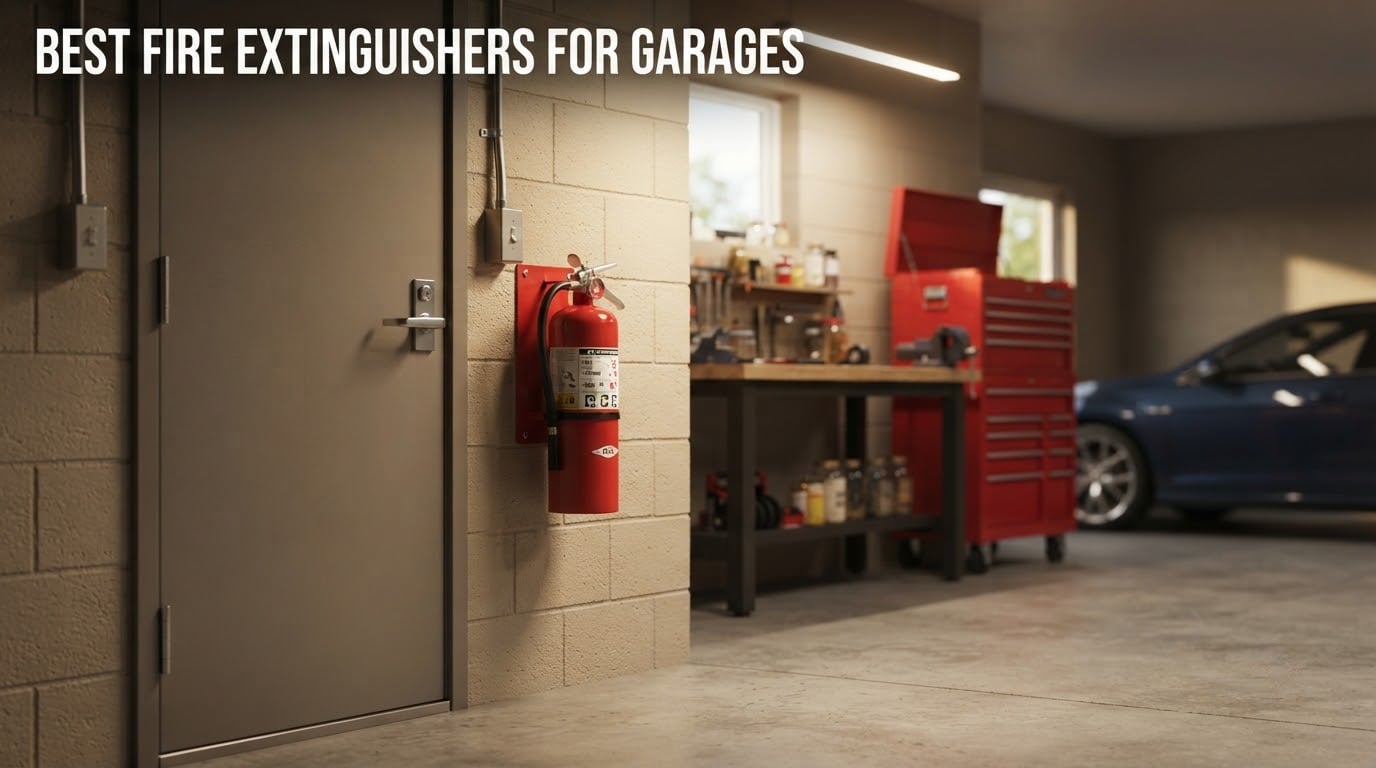
The best fire extinguishers for garages are multi-purpose ABC dry chemical units rated at least 2-A:10-B:C, with 3-A:40-B:C being the better buy at the same weight. A garage is the one room in most houses that contains all three fire classes at once: ordinary combustibles, flammable liquids, and energized electrical equipment. Only an ABC dry chemical unit covers all three.
That direct answer only holds for about half of what people actually need, though. A 10-B:C unit is genuinely excellent inside a car and genuinely wrong for a pile of sawdust, and the two-unit setup most owners converge on solves both problems with one wall bracket and one vehicle mount.
We compared eight extinguishers across the UL rating strings, agent types, loaded weight, valve construction and discharge specs to work out which one belongs where. This guide covers what actually burns in a garage, how to read a rating like 3A:40-B:C, how big a unit your space needs, and where to mount it.
A note on limits before we start. A portable extinguisher is for incipient fires only — the first minute or two, before the fire department arrives. If a garage fire has spread to the ceiling, if there is smoke filling the space, or if you are unsure, get out, close the door behind you and call the fire department from outside. No canister on this list changes that.
Table of Contents
- Key Features to Look For in a Garage Fire Extinguisher
- What Actually Causes Garage Fires
- Top 3 Fire Extinguisher Picks for Garages in 2026
- All 8 Fire Extinguishers for Garages Compared in 2026
- 1. First Alert GARAGE10 Fire Extinguisher, 10-B:C — Best Overall for a Garage
- 2. First Alert HOME2PRO Rechargeable, 2-A:10-B:C — Best Value for a Standard Garage
- 3. Kidde PRO-5MP-1, 3A:40-B:C — Most Versatile for Workshops and Shops
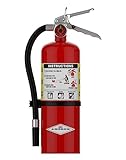
- 4. Amerex B402 5 lb ABC Dry Chemical — Best for a Two-Car Garage
- 5. Kidde M10G Auto 10 — Best for Vehicles and Motorcycle Bays
- 6. Amerex A411 20 lb ABC Dry Chemical — Best for Large Workshops and Shops
- 7. Kidde FA110G Basic 110, 1-A:10-B:C — Budget Pick for a Smaller Space
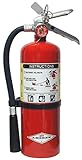
- 8. Amerex B500 5 lb ABC Dry Chemical — Best for a Workshop Bench Area
- How to Choose a Fire Extinguisher for Your Garage in 2026
- Fire classes: A, B and C, and why D and K do not belong
- Decoding the UL rating string
- Chemical weight versus loaded weight
- The size ladder: 2.5 lb, 5 lb and beyond
- Rechargeable metal build versus disposable build
- Placement and mounting in a garage
- Lithium-ion, e-bike and power tool battery charging
- Using it and keeping it working
- What We Would Not Buy for a Garage
- Frequently Asked Questions
- Our Final Verdict on Garage Fire Extinguishers in 2026
Key Features to Look For in a Garage Fire Extinguisher
Classification (ABC): a garage holds ordinary combustibles (Class A), flammable liquids like gasoline, thinner and paint (Class B), and live electrical equipment (Class C). An ABC dry chemical unit covers all three in one canister.
Rating strength: 2-A:10-B:C is the common code minimum for a one- or two-car garage. 3-A:40-B:C is the better buy at the same weight, and a straight 10-B:C unit is a vehicle tool rather than a room tool.
Loaded weight: the number that decides whether anyone can actually carry it when it matters. A 5 lb agent unit typically lands around 9 lb loaded.
Metal valve and handle: commercial-grade metal valve assemblies can be professionally serviced and refilled; plastic-valve disposables are replaced after any use.
Mounting hardware: every unit here ships with a bracket, strap or hanger. A wall-mounted unit near the exit beats one on a shelf behind the lawnmower.
Battery charging: if e-bikes, scooters or power tool batteries charge in the space, a lithium-ion capable unit is worth adding alongside the ABC canister, because no ABC rating covers a thermal-runaway battery fire.
What Actually Causes Garage Fires
This is the question we get most, and it is worth answering before shopping, because the causes point directly at what you should be carrying. The list runs roughly in this order.
Electrical overload and extension cords. Deteriorated cords, overloaded strips and permanent appliance circuits are the leading ignition source in attached garages, and they produce energized Class C fires.
Fuel and solvent storage. Gasoline cans, lawn equipment fuel, paint, thinner and finishing solvents give you Class B liquid fires that spread fast across a concrete floor.
Battery and charger charging. Lithium-ion e-bike, scooter and tool battery packs are the modern garage hazard, and their failure mode is thermal runaway rather than ordinary burning.
Heat sources. Space heaters, hot work, welding sparks, a grinding wheel or a hot light fixture near a hanging rag.
Smoking materials. Still on the list, still the one you control most easily.
Every one of those first four produces a fire class that a 10-B:C unit alone will not fully handle. That is the entire argument for ABC powder in a garage.
Top 3 Fire Extinguisher Picks for Garages in 2026
First Alert GARAGE10
- 10-B:C rating
- Sodium bicarbonate agent
- Metal head and valve
- Bracket and strap included
First Alert HOME2PRO
- 2-A:10-B:C rating
- Rechargeable by professionals
- 9.6 lb loaded weight
- Wall hook included
All 8 Fire Extinguishers for Garages Compared in 2026
| Product | Key Specs | Pricing |
|---|---|---|
| First Alert GARAGE10 Fire Extinguisher |
|
Check Latest Price |
| First Alert HOME2PRO Rechargeable |
|
Check Latest Price |
| Kidde PRO-5MP-1 Commercial |
|
Check Latest Price |
 Amerex B402 5 lb ABC Amerex B402 5 lb ABC |
|
Check Latest Price |
 Kidde M10G Auto 10 Kidde M10G Auto 10 |
|
Check Latest Price |
 Amerex A411 20 lb ABC Amerex A411 20 lb ABC |
|
Check Latest Price |
 Kidde FA110G Basic 110 Kidde FA110G Basic 110 |
|
Check Latest Price |
 Amerex B500 5 lb ABC Amerex B500 5 lb ABC |
|
Check Latest Price |
1. First Alert GARAGE10 Fire Extinguisher, 10-B:C — Best Overall for a Garage
First Alert Fire Extinguisher, Standard Garage Use
UL rated 10-B:C
Sodium bicarbonate agent
Metal head and commercial grade valve
Bracket and strap included
- Compact right-sized unit that mounts by doors
- Metal pull pin and safety seal arrive intact
- Color-coded gauge reads at a glance
- Also rated for marine use
- 10-B:C only with no Class A rating
- Small capacity suits early-stage fires
This is the unit we would mount first in most attached garages, and the reasoning is about placement more than capacity. At roughly 15 inches tall it goes beside the door to the house without becoming an obstacle, and 10-B:C covers the two garage fire classes that actually start most incidents: flammable liquid spills and live electrical equipment.
Reviewers consistently describe the same arrival experience: the metal pull pin and safety seal intact, cardboard positioners in the box, and a color-coded metal pressure gauge that is legible from a couple of feet away. That matters more than it sounds, because an extinguisher you have to squint at is an extinguisher you may not check.
The construction is genuinely shop-grade for the size. A durable metal head with a commercial-grade valve and trigger means this is not the disposable plastic-handle pattern, and U.S. Coast Guard approval means the same canister suits a boat bay or a dock locker without a second purchase.
What you give up is Class A capability. There is no water-equivalent rating on the label, so on a wood, paper or trash fire it performs below a 1A unit by the UL numbers. In practice that means this is a strong secondary canister rather than the only one in the space.
Where it earns its spot
Mount this one on the interior wall next to the exit door, at about shoulder height, where you can reach it without walking past the vehicle or the fuel cans. Keep a second one near the workbench if the garage is deep enough that the door mount leaves the far corner uncovered.
It is also the right pick for anyone whose garage is really a boat, jet ski or motorcycle bay. The marine approval and the compact dimensions make it the natural stowage unit in a vehicle or a locker.
Where it falls short
The 10-B:C ceiling is a real limit, not a formality. Sawdust, cardboard, shop towels and plastic shelving are Class A, and this unit is not rated to put them out. Owners who store lumber, insulation or woodworking offcuts in the same space should pair it with an ABC unit rather than rely on it alone.
Capacity is the other limit. A unit this size handles an early-stage fire and nothing more, so it works best as the fast-response canister while a larger unit is fetched or while you are calling for help. If the fire is already climbing a wall, the correct move is to leave.
As an Amazon Associate we earn from qualifying purchases, at no additional cost to you. CERTAIN CONTENT THAT APPEARS ON THIS SITE COMES FROM AMAZON. THIS CONTENT IS PROVIDED 'AS IS' AND IS SUBJECT TO CHANGE OR REMOVAL AT ANY TIME.
2. First Alert HOME2PRO Rechargeable, 2-A:10-B:C — Best Value for a Standard Garage
First Alert Fire Extinguisher, Heavy Duty for Home & Commercial Use
UL rated 2-A:10-B:C
Rechargeable by certified professionals
9.6 lb loaded weight
12-year limited warranty
- Rechargeable instead of repeatedly replaced
- Meets the 2-A:10-B:C code minimum
- Wall bracket seats securely
- Gauge stays readable through temperature swings
- Heavier at 9.6 lb for one-handed carry
- Dry chemical powder packs over time
This is the most common answer to the direct question of what belongs in a normal garage, and for good reason. 2-A:10-B:C is the minimum rating many local code rules expect, and unlike the smaller residential units it carries real Class A water-equivalent performance on top of the B and C ratings.
The build is all metal with a commercial-grade metal valve and trigger, and the mono ammonium phosphate agent is the standard dry chemical that handles wood, paper, trash, plastics, gasoline, oil and electrical fires in one pass. Owners treat it as a primary unit rather than a backup, which is the tell that a product is properly sized.
The recharge story is what separates it from the bargain disposables. Once it has been used, a certified fire-protection shop refills it instead of it going to a waste stream, and over a dozen years that changes the arithmetic. Shop owners we read about write the purchase date on an inspection tag and set a monthly gauge reminder, which is a habit worth copying whatever you buy.
Reviews also note the packaging keeps the pin from dislodging in transit, which addresses the single most common complaint owners have about ordering an extinguisher online. A unit that arrives already part-discharged is useless, and this one apparently arrives intact.
Where it earns its spot
This is the default answer for an attached one-car or two-car garage, especially if you store paint, thinner, propane cylinders or lawn equipment fuel inside. It covers every class that shows up there, meets the code minimum in most jurisdictions, and stays in service indefinitely if you get it serviced.
For an older home, it is also the safe upgrade path from a small household unit. Swapping a 1-A:10-B:C canister for this one adds an entire A unit of rating without changing where it mounts.
Where it falls short
Nine and a half pounds loaded is the honest drawback. That is heavy enough that a smaller or older person may struggle to carry it one-handed while also holding a hose, and in a moment of panic weight is the thing people notice first.
Second, this is a rechargeable build in a category where many owners forget service exists. If you never arrange a refill after a discharge, the recharge advantage is theoretical, and a used-up canister should be replaced immediately rather than put back on the wall.
As an Amazon Associate we earn from qualifying purchases, at no additional cost to you. CERTAIN CONTENT THAT APPEARS ON THIS SITE COMES FROM AMAZON. THIS CONTENT IS PROVIDED 'AS IS' AND IS SUBJECT TO CHANGE OR REMOVAL AT ANY TIME.
3. Kidde PRO-5MP-1, 3A:40-B:C — Most Versatile for Workshops and Shops
Kidde Pro 340 Commercial Fire Extinguisher, 3A:40-B:C, PRO-5MP-1
UL rated 3A:40-B:C
5.5 lb of agent
195 PSI, 12-18 ft range
13-15 second discharge
- 3A:40-B:C rating is a real step up from household units
- All-metal valve and impact-resistant handle
- Rechargeable after professional servicing
- Metal wall hanger included
- 8.95 lb is heavy for quick one-handed handling
- Requires professional servicing between uses
This is the unit to buy if your garage has become a shop. A 3A:40-B:C rating is a step up from everything else in this group on both letters at once, and the manufacturer puts it plainly as more firefighting power for trash, wood, paper, liquids, gases and electrical equipment.
The numbers back up the feel. Operating pressure is 195 PSI, discharge time runs 13 to 15 seconds, and the discharge range is 12 to 18 feet, which means you are knocking down a fire from outside the fuel rather than leaning into it. That reach is the most useful spec on the label for anyone with a deep bay.
Construction is all metal with a metal valve assembly and a rust- and impact-resistant handle, and it is rechargeable and designed for multiple uses after professional servicing. The included UL-approved metal wall hanger is a step up from the plastic strap brackets on the smaller units, which matters when the canister is this heavy.
With more than 5,000 ratings averaging 4.7, buyers consistently frame it as a step up from household units rather than a replacement for one. The QR code for registration and warranty is a small touch that pays off when the six-year limited warranty needs claiming.
Where it earns its spot
Detached workshops, welding bays, woodshops with sawdust accumulation, and any garage where you store bulk fuel, paint or solvents. The 3A:40-B:C rating means a class A fire in sawdust or rags is genuinely inside its capability, which is not true of any of the 10-B:C units here.
The 12-to-18-foot range also makes it the right choice in a bay where the hazard sits at the back behind a vehicle or a bench. You fight the fire from the doorway rather than from beside the fuel.
Where it falls short
At 8.95 lb loaded it is heavy for fast handling, and shop fires reward speed. If the person who would grab it is smaller or older, a lighter ABC unit that can be moved without thinking will do more good than a bigger one that gets wrestled off the wall too late.
It is also only useful as designed if you actually get it serviced. Between uses it needs a certified recharge, and skipping that after a partial discharge means the next fire finds an empty canister. Mark the service date somewhere visible.
As an Amazon Associate we earn from qualifying purchases, at no additional cost to you. CERTAIN CONTENT THAT APPEARS ON THIS SITE COMES FROM AMAZON. THIS CONTENT IS PROVIDED 'AS IS' AND IS SUBJECT TO CHANGE OR REMOVAL AT ANY TIME.
4. Amerex B402 5 lb ABC Dry Chemical — Best for a Two-Car Garage
Amerex B402, 5 lb. ABC Dry Chemical Fire Extinguisher, with Wall Bracket
Class A:B:C ABC dry chemical
5 lb agent, 9.44 lb loaded
All-metal aluminum valve
Wall bracket included
- Full ABC coverage in a single unit
- All-metal aluminum valve construction
- Wall bracket included
- Well established model
- Not rechargeable after discharge
- 9.44 lb weight is heavy for a residential garage
The Amerex B402 is the plain commercial workhorse: five pounds of ABC dry chemical, an all-metal aluminum valve and a wall bracket in the box. It does one job, which is covering ordinary combustibles, flammable liquid spills and live electrical equipment, and it has been doing it long enough that over 3,000 ratings have formed around it.
Ratings sit tightly at 4.7 with a high share of five-star reviews, and the reason is that there is nothing to get wrong. No assembly, no adapter, no consumable parts. You mount the bracket, set the canister in it and check the gauge occasionally.
For a two-car attached garage where someone stores fuel cans and a lawnmower, this is a straightforward, no-frills answer. The valve is metal rather than plastic even though the unit is not rechargeable, so the failure mode that ends cheap plastic-valve extinguishers early does not apply here.
It also suits a secondary building where you want coverage without thinking about service schedules. There is no refill appointment to make and no shop that has to be found in a hurry.
Where it earns its spot
Two-car garages and attached workshops where the storage side of the space matters: fuel cans, solvents, paint, lawn equipment. Full ABC coverage in one canister means one bracket on the wall covers every class you are likely to meet.
It is also a good second unit. If you already run a rechargeable ABC canister by the door, a B402 on the opposite wall covers the far corner of a long bay without competing for the same mounting point.
Where it falls short
It is not rechargeable, and that is the real limitation. After any use at all it is finished, and a half-used canister is worse than none because it looks armed on the wall. Owners of partially discharged units are left buying a replacement at exactly the wrong moment.
Nine pounds and change loaded is also unkind in a hurry, particularly for a two-car garage where the far corner is the hardest place to carry anything. If speed of handling is the deciding factor for your household, look at the lighter options below.
As an Amazon Associate we earn from qualifying purchases, at no additional cost to you. CERTAIN CONTENT THAT APPEARS ON THIS SITE COMES FROM AMAZON. THIS CONTENT IS PROVIDED 'AS IS' AND IS SUBJECT TO CHANGE OR REMOVAL AT ANY TIME.
5. Kidde M10G Auto 10 — Best for Vehicles and Motorcycle Bays
Kidde Auto 10 Fire Extinguisher for Cars and Trucks, 10-B:C, M10G
UL rated 10-B:C
2.9 lb of sodium bicarbonate
8-12 second discharge
4 lb total weight
- Small enough to live in a vehicle cabin
- All-metal valve and impact-resistant handle
- Strap bracket included
- Easy-to-read charge indicator
- No Class A rating at all
- 6-8 ft discharge range limits usefulness
Nearly three thousand ratings at 4.8 makes this one of the best-liked units in the whole category, and the reason is that it is purpose-built rather than a compromise. It targets the fires that actually start in a car or truck: burning fuel, burning oil and energized electrical equipment.
At four pounds loaded with 2.9 lb of sodium bicarbonate agent, it is small enough to live in a cabin or a door pocket rather than in a trunk. Someone on the Garage Journal thread described keeping a compact unit within reach of the driver’s seat for exactly this reason, because in a vehicle fire the seconds are the whole problem.
It discharges in 8 to 12 seconds at 100 PSI with a 6 to 8 foot range, and the all-metal valve assembly plus impact-resistant handle mean it survives a vehicle environment better than a plastic-handle unit would. The included UL-approved plastic strap bracket lets you mount it to a bracket, a rail or a seat frame.
A member of that thread described a ground strap shorting, melting and igniting firewall insulation in a 1996 Impala SS, with the only thing that gave occupants time to get out being a small unit kept in the car. That is the scenario this device exists for, and reviewers consistently place it there rather than in a garage role.
Where it earns its spot
Inside the vehicle, in a motorcycle bay, or mounted near a motorcycle or lawn equipment in the garage. It is the correct tool for a fuel or electrical fire in or around a vehicle, which is the single most likely garage incident involving a car.
Pair it with a wall-mounted ABC unit and you have the two-unit setup that most experienced owners describe: a room canister by the door and a compact vehicle canister within reach of the seat.
Where it falls short
There is no Class A rating whatsoever, so it will not handle a wood, paper or trash fire. A garage full of cardboard and shop towels is exactly the scenario it cannot help with.
The 6-to-8-foot range is also a hard limit on a fully involved vehicle, where flames routinely exceed the reach of a hand unit from outside the door. Treat it as a chance to get out, not as a way to save the car.
As an Amazon Associate we earn from qualifying purchases, at no additional cost to you. CERTAIN CONTENT THAT APPEARS ON THIS SITE COMES FROM AMAZON. THIS CONTENT IS PROVIDED 'AS IS' AND IS SUBJECT TO CHANGE OR REMOVAL AT ANY TIME.
6. Amerex A411 20 lb ABC Dry Chemical — Best for Large Workshops and Shops
Amerex A411, 20lb ABC Dry Chemical Class A B C Multi-Purpose 20 Pound Fire Extinguisher with Wall Bracket.
20 lb ABC dry chemical
34.6 lb loaded weight
Meets UL 299 and UL 711
Wall hanger included
- Largest suppression capacity in this group
- Full A B C coverage from one unit
- Siliconized agent leaves less residue
- Meets UL 299 and UL 711
- 34.6 lb loaded weight is impractical for most users
- Powder cleanup required after any discharge
The A411 is the capacity answer. Twenty pounds of specially fluidized and siliconized mono ammonium phosphate in a single canister, rated for Class A, B and C and compliant with UL 299 and UL 711, is a commercial load rather than a household one.
The siliconized treatment is the interesting engineering detail here. On a Class A fire the agent melts at approximately 350 degrees Fahrenheit and forms a chemical barrier that insulates the fuel, while on Class B fires it smothers the burning liquid and prevents electrical conduction back to the operator. It is the mechanism that makes dry powder work on solids at all.
Reviews focus on the sheer capacity, which is genuinely differentiating for a workshop that stores bulk fuel or paint. They also note the siliconized formula leaves less residue than straight mono ammonium phosphate, and the multilingual QR-coded labeling and included wall hanger are details you would expect from a commercial unit.
This is the one in the group where the star rating dips most noticeably and the one-star share is highest, and the complaints concentrate on one thing: the 34.6 lb loaded weight. Buyers who wanted garage-sized fire protection find they bought shop-sized handling.
Where it earns its spot
Large detached workshops, small commercial shops, and buildings where code requires a heavier unit. If you genuinely have two people who can lift 35 pounds quickly, the capacity pays for itself the first time it is needed.
It also works as a fixed installation rather than a carry tool, mounted on a wall hanger at the right height with clear access. Some shop setups treat it as semi-permanent equipment.
Where it falls short
Thirty-four pounds is beyond what most people can lift quickly and control while aiming a stream, and speed is everything in the first seconds. For a typical residential garage this is the wrong size in the same way a semi truck is the wrong vehicle for a grocery run.
The cleanup burden is real too. Any dry chemical discharge means powder in every crevice, on every surface and inside every piece of nearby electronics, and this unit holds enough powder to coat a small building. Plan for cleanup before you buy, not after.
As an Amazon Associate we earn from qualifying purchases, at no additional cost to you. CERTAIN CONTENT THAT APPEARS ON THIS SITE COMES FROM AMAZON. THIS CONTENT IS PROVIDED 'AS IS' AND IS SUBJECT TO CHANGE OR REMOVAL AT ANY TIME.
7. Kidde FA110G Basic 110, 1-A:10-B:C — Budget Pick for a Smaller Space
Kidde Basic 110 Fire Extinguisher for Home, 1-A:10-B:C, FA110G, 1 Pack
UL rated 1-A:10-B:C
2.5 lb of agent
3.9 lb loaded weight
Coast Guard DOT approved
- Most reviewed extinguisher in the category
- 1-A:10-B:C covers wood
- liquids and electrical
- Light at 3.9 lb and easy to handle
- Strap bracket included
- Residential single-use only
- Does not meet the 2-A:10-B:C commercial minimum
With more than 30,000 ratings at 4.8, this is the most reviewed extinguisher on our list and the top seller in its category, and that volume is itself informative. It is what people actually buy when they want one working extinguisher and nothing complicated.
The 1-A:10-B:C rating covers trash, wood, paper, liquids, gases and electrical equipment, which is a real spread of coverage for a light unit. The powder coated aluminum cylinder resists corrosion, the pull pin is an easy-pull safety type, and the pressure gauge tells you at a glance whether the arrow sits in the green.
Handling is the standout. At 3.9 pounds loaded with 2.5 lb of agent, this is a canister almost anyone can lift one-handed and carry correctly, which for a small incipient fire matters more than raw rating. Owners describe treating it as the default one-per-room unit.
It is Coast Guard DOT approved as well, and the UL-approved plastic strap bracket is included, so mounting it in a boat, a vehicle or a small shed is straightforward.
Where it earns its spot
Small attached garages, sheds, carports and closets near a home workshop. Anywhere the fire risk is ordinary and the space is not large enough to need commercial capacity, this is a proportionate choice.
It is also a sensible second unit on a wall where a heavier canister cannot be mounted high or handled easily by whoever lives there. Redundancy you can actually lift beats one large unit nobody reaches.
Where it falls short
It is residential single-use equipment. Once discharged it is replaced, so over a dozen years you are buying several, and the 1-A:10-B:C rating falls short of the 2-A:10-B:C minimum that some jurisdictions require for commercial or workshop spaces.
The 2.5 lb of agent also suits small incipient fires only. Forum owners report trainers demonstrating that a user can empty a unit of this size in under two seconds, which leaves nothing in reserve if the fire is not out immediately. A second canister is the answer.
As an Amazon Associate we earn from qualifying purchases, at no additional cost to you. CERTAIN CONTENT THAT APPEARS ON THIS SITE COMES FROM AMAZON. THIS CONTENT IS PROVIDED 'AS IS' AND IS SUBJECT TO CHANGE OR REMOVAL AT ANY TIME.
8. Amerex B500 5 lb ABC Dry Chemical — Best for a Workshop Bench Area
Amerex B500 Fire Extinguisher, 5 lb. ABC Dry Chemical
Class A:B:C ABC dry chemical
14 second discharge time
All-metal aluminum valve
Wall bracket included
- Full ABC coverage with 14 second discharge
- Aluminum valve in a compact body
- Wall bracket included
- Rated for commercial and residential use
- Single-use after discharge
- Listed weight of 1 lb understates loaded weight
The B500 is the second Amerex in this group and it fills a slightly different slot. Same ABC dry chemical coverage of Class A, B and C, an aluminum metal valve, a wall bracket in the box and a stated discharge time of 14 seconds.
That 14-second figure is the interesting number. Dry chemical extinguishers are almost always rated in the 8-to-16 second band, and owners on the Garage Journal thread made the point that you are budgeting in seconds rather than minutes. Knowing yours gives you 14 changes how you approach a spreading fire, because it means a second unit matters rather than being optional.
Ratings average 4.6 across more than 2,300 reviews with 85 percent five-star, and the reviews read like a dependable general-purpose unit rather than a specialist. It is listed for both commercial and residential use, which suits a garage that doubles as a small shop.
One specification deserves a flag. The listed product weight is given as 1 pound, which plainly understates the loaded weight of a canister holding five pounds of agent. Use the chemistry, not the shipping weight, when you judge whether you can carry it.
Where it earns its spot
Workshop and bench areas, especially where the hazard is a spread of small fires rather than one big one: solvent rags, finishes, a bench grinder, a charging shelf. Full ABC coverage in a unit you can move quickly is the point.
It is a good pairing with a larger shop canister, mounted on the opposite wall from the main unit so a fire starting near the bench does not mean walking past the fuel to reach your protection.
Where it falls short
Single-use, like most 5 lb disposables, so any discharge ends it. The same logic applies as to the B402: replace it immediately rather than returning a partially emptied unit to the wall.
As with every dry chemical unit in this roundup, discharge means a corrosive powder mess through your tools, benches and electronics. If your workspace is primarily electronics or a paint booth where overspray matters, a clean-agent unit has a legitimate role as a secondary.
As an Amazon Associate we earn from qualifying purchases, at no additional cost to you. CERTAIN CONTENT THAT APPEARS ON THIS SITE COMES FROM AMAZON. THIS CONTENT IS PROVIDED 'AS IS' AND IS SUBJECT TO CHANGE OR REMOVAL AT ANY TIME.
How to Choose a Fire Extinguisher for Your Garage in 2026
Fire classes: A, B and C, and why D and K do not belong
Class A covers ordinary combustibles: wood, paper, cardboard, trash, plastics and shop rags. Class B covers flammable liquids: gasoline, diesel, paint, thinner, solvents and grease. Class C covers fires in or around energized electrical equipment.
A garage contains all three, which is why the ABC classification is not marketing language. It is the only agent that handles the whole hazard profile of the space, and it is why a 10-B:C unit cannot be your only canister in a garage with cardboard and lumber in it.
Class D covers combustible metals and Class K covers cooking oils. Neither belongs in a residential or workshop garage, and a Class K unit in particular is designed for a commercial kitchen and does nothing useful for the fires you are actually worried about.
Decoding the UL rating string
The rating string reads as a Class A rating in units of water, a Class B rating in square feet of coverage, then a C rating with no number.
The leading A number is water equivalency, roughly 1.25 gallons of water per A unit. So 2-A:10-B:C means two units of water-equivalent cooling, 3A:40-B:C means three, and a bare 10-B:C means zero A rating at all.
The B number is square feet of flammable liquid surface the unit can cover. 10-B:C is a small spill area, 40-B:C is a much larger floor spill such as a fuel container that has gone over.
The trailing :C simply means the unit is rated for energized electrical equipment. It is pass or fail, with no number attached.
This is how you can tell at a glance that a 10-B:C canister is not a weaker version of a 3A:40-B:C. It is a different tool covering a different set of fuels, and for a garage with lumber and cardboard in it the missing A rating is a real gap.
Chemical weight versus loaded weight
Advertised capacity is the weight of agent, not of the canister you lift. A 5 lb unit typically weighs around 9 lb loaded once the cylinder, valve, propellant and agent are together, and that loaded figure is what decides whether it gets used quickly or picked up carefully.
The FA110G at 2.5 lb of agent and 3.9 lb loaded, and the M10G at 2.9 lb of agent and 4 lb loaded, are genuinely one-hand units. The A411 at 20 lb of agent and 34.6 lb loaded is not, no matter how good the rating is.
The size ladder: 2.5 lb, 5 lb and beyond
2.5 lb class: a vehicle, a motorcycle, a bench, a small shed. Good for a fast grab and a fast fire, not for a room.
2-A:10-B:C class: the default for an attached one- or two-car garage, meeting the common code minimum while remaining hand-carryable.
3A:40-B:C class: the step up for workshops, welding bays, woodshops and anywhere with sawdust, bulk fuel or solvent storage. More rating and more reach per discharge.
10 lb and above: for shops, carports serving multiple vehicles and commercial spaces where more than one capable person can lift the unit quickly.
Our short answer on the size question that comes up constantly: go 5 lb as your garage default, keep a small 10-B:C unit in the vehicle, and move up one rung only if you genuinely have fuel, paint or shop dust in the space.
Rechargeable metal build versus disposable build
A metal valve and commercial-grade metal trigger indicate a build that a certified fire-protection shop can refill. A plastic handle and valve indicate a single-use canister that is replaced after any discharge.
Over twelve years that is not a marginal difference. Members of the Garage Journal thread described sourcing refurbished units from local fire-protection companies and eBay, and shop owners in the same thread treat professional recharge as routine rather than exceptional. Rechargeable builds such as the HOME2PRO and the Kidde PRO-5MP-1 make that cycle easy.
Two cautions. First, once a canister has been discharged at all it is finished until serviced, and there is no partial credit. Second, you will see repeated advice online telling you to shake a dry chemical canister periodically to stop the powder packing. That is not part of the manufacturers’ care instructions for the units here, so follow the label on your own canister.
Placement and mounting in a garage
Yes, you can absolutely put a fire extinguisher in your garage, and for an attached garage you should. The rule that matters is placement: mount it on an interior wall near the exit door, not over the workbench, not above a heat source, and not where you have to walk through the fire to reach it.
Keep it off the floor where a leaking vehicle or a backed-up floor drain can soak it, and in an unheated garage keep it somewhere that does not freeze. Every unit here ships with a bracket, strap or hanger, so the mount itself is the easy part.
The two-unit strategy is the pattern experienced owners describe and the one we recommend: a rechargeable ABC canister mounted by the door for the room, plus a compact 10-B:C unit mounted in the vehicle or beside the bench for the immediate fire. Forum members describe carrying exactly this setup for good reason, and one noted that after a partial discharge the extinguisher is finished, which is why a second unit matters.
Lithium-ion, e-bike and power tool battery charging
If e-bikes, scooters or power tool batteries charge in your garage, plan for it separately. A lithium-ion cell in thermal runaway does not behave like a burning log or a spilled fuel pool, and no ABC rating printed on a canister is a lithium-ion certification.
The practical response is layered. Keep the ABC canister for everything else, charge batteries on a non-combustible surface away from stored fuel and cardboard, do not charge unattended or overnight, and use a manufacturer-supplied charger rather than a random power supply. Where charging is frequent, a dedicated lithium-ion capable unit is a reasonable addition rather than a replacement.
Using it and keeping it working
When you use one, work on the four-step sequence: pull the pin, aim at the base of the fire, squeeze the handle, and sweep side to side across the fuel. Aiming at the flames wastes agent, and so does a wide panic spray. Forum advice consistently favours short controlled pulses at the base.
Monthly, look at the gauge and confirm the arrow sits in the green, check the pin and seal are intact, and confirm nothing has corroded. Note the purchase date on a tag. Rechargeable units need professional servicing on the standard interval, and disposable units have a service life measured in years from manufacture rather than a fixed replacement date on the label.
And expect a powder cleanup. Dry chemical residue is corrosive and gets into tool chests, electronics and vehicle interiors. Keep a shop vac and a damp cloth on hand, and remember that even a single discharge ends the canister until it is serviced.
One more practical tip from owners: check the pin and pressure gauge the moment a new unit arrives, because extinguishers have been known to arrive partially discharged in the box. Do not put an unverified canister on the wall and assume.
What We Would Not Buy for a Garage
A few categories show up constantly in garage aisles and forums, and all of them fail the same test: no UL fire rating on the label.
Aerosol fire extinguisher cans. These are novelty products sold near kitchen and BBQ sections. They are not UL listed portable fire extinguishers, they cannot be serviced, and the spray duration measured in seconds is short enough that a spreading fire simply outlasts the canister.
Compact halogenated-agent extinguishers marketed as clean. The clean-agent appeal is real for electronics and interiors, but the ratings tell a different story. A 2.5 lb clean-agent canister is commonly rated 0A and 2B, while a 2.5 lb ABC dry chemical canister is rated 1A and 10B. That means you would need five clean-agent canisters to match one dry chemical canister on a liquid fire, and none of them work on upholstery or wood at all.
Clean-agent-only garages. The same logic rules out making a clean agent your only canister. Forum owners have also raised a practical point that matters more than chemistry: in a crisis, nobody can tell a silver canister from a red one. A standard red canister with a pin is recognizable to everyone in the building, and recognition is part of the response time.
Any canister without a pressure gauge. If you cannot tell whether it is charged, you cannot tell whether it will work. Every unit in our roundup has a readable gauge.
Our test method for this guide was spec-first rather than destructive. We compared UL rating strings, agent chemistry, loaded weight, valve and head construction, discharge time and range, mounting hardware included, and warranty and service terms across all eight canisters, then weighted those against how each one maps to a real garage layout. Nobody discharges eight fire extinguishers to write a garage guide.
Frequently Asked Questions
Can I put a fire extinguisher in my garage?
Yes, and for an attached garage you should. Mount it on an interior wall near the exit door, not over a workbench or a heat source, not where a vehicle or a floor drain can soak it, and in an unheated space somewhere it will not freeze. Keep it reachable without walking past the fire. Every unit in our roundup includes a bracket, strap or hanger, and the best setup pairs a rechargeable ABC canister by the door with a compact 10-B:C unit in the vehicle.
Do I need a 5 lb or 10 lb fire extinguisher for a garage?
A 5 lb chemical unit is the right default for a one- or two-car attached garage, because it is the smallest size that comfortably meets the 2-A:10-B:C code minimum many jurisdictions require. Move to 10 lb only if you store bulk fuel, paint or solvents, run a workshop, or have more than one capable person who can lift a heavy canister quickly. A 2.5 lb unit is a vehicle and bench backup rather than a room extinguisher, and going 5 lb as the default with clear justification is where most people are under-protected.
What is the most common cause of garage fires?
Electrical problems come first: deteriorated extension cords, overloaded power strips and permanent appliance circuits that produce energized electrical fires. Next comes fuel and solvent storage, meaning gasoline cans, lawn equipment fuel, paint, thinner and finishing solvents. Third is battery and charger charging for e-bikes, scooters and power tool packs. Fourth are heat sources such as space heaters, hot work, welding sparks and hot grinding wheels. Smoking materials still appear on the list. The first four are why an ABC dry chemical rating matters in a garage.
Which is better, ABC or CO2 for a garage?
ABC dry chemical, without exception, because it is the only agent that covers all three fire classes a garage contains: ordinary combustibles, flammable liquids and energized electrical equipment. CO2 is rated for Class B and C only, leaves no Class A capability at all, has to be discharged from very close range, and carries an asphyxiation risk that makes it a poor choice in a small enclosed space with pets or people. Clean agents such as Halotron leave no residue but do nothing for upholstery or wood, so they belong as a secondary rather than the primary canister.
Is a 2.5 lb fire extinguisher enough for a garage?
Not as your only unit. A 2.5 lb canister holding around 2.5 lb of agent and weighing under 4 pounds is excellent inside a vehicle or beside a workbench, and trainers have demonstrated that an untrained user can empty one in under two seconds. That makes it a fast-response tool rather than a room extinguisher. For a garage overall, pair a 2-A:10-B:C or 3-A:40-B:C ABC canister mounted near the exit with a compact 10-B:C unit in the vehicle, and never plan on one canister covering both jobs.
Our Final Verdict on Garage Fire Extinguishers in 2026
The best fire extinguishers for garages, in short, are the First Alert GARAGE10 as our editor’s choice for fast, well-mounted B and C coverage, the First Alert HOME2PRO as the best value for a standard attached garage, and the Kidde PRO-5MP-1 as the premium pick when the space is really a workshop.
Most households should end up with two canisters rather than one: a rechargeable ABC unit rated 2-A:10-B:C or better on the wall beside the exit door, and a compact 10-B:C unit in the vehicle or beside the bench. Check both gauges monthly, write the purchase dates down, and remember that any discharge means the canister is finished until it is serviced.
Before you settle, it is worth taking ten minutes to cut the ignition sources rather than only planning the response. Reload batteries away from fuel cans, replace frayed extension cords, and move paper and rags out of the burn zone. If you want to compare how we weigh the practical side of home fire gear, our fire pit roundup, our smokeless fire pit picks and our propane fire pit guide cover the outdoor half of that equation.